How to Store Surfboard Accessories Without Damage
Store surfboard accessories clean and suitably dry in a dry, shaded, reasonably ventilated area away from direct sunlight and avoidable heat. Match the storage method to the item: separate fins and hardware, keep leashes loose without prolonged tension, leave soft bags or covers uncompressed, and use broad, padded, stable support for racks or hangers.
Surfboard accessory storage decision guide
Use these three checks in order. The storage setup is ready only when the gear itself, the surrounding environment, and the way the item is supported all suit storage.
Remove salt, sand and dirt, then keep the accessory out of its enclosure until visible and accessible moisture has dried.
Choose a dry, shaded position with reasonable airflow, away from direct sunlight, obvious heat sources, leaks and contaminants.
Contain small parts, let flexible gear rest without sharp bends or prolonged tension, and support larger items without concentrated pressure.
- Fins and small hardware
- Use separated slots, pockets or compartments; keep related hardware identifiable instead of loose and mixed together.
- Leashes
- Store dry in a loose, relaxed shape with no sharp bends, heavy compression or prolonged hanging tension.
- Bags, covers and board socks
- Dry before storage, then fold, roll or support them lightly rather than leaving fabric or padding tightly crushed.
- Racks and hangers
- Use broad padded contact, stable support and enough clearance to prevent slipping, impact or concentrated loading.
Decision rule: if an accessory is still damp, exposed to direct sun or avoidable heat, or held under concentrated pressure or tension, correct that condition before treating the setup as storage-ready.
Storage damage usually develops from three controllable exposures: trapped moisture, prolonged heat or sunlight, and mechanical stress from compression, tension, unstable support or concentrated pressure. The exact arrangement should follow the accessory's material, construction, available space and expected storage duration.
Table of Contents
Prepare Surfboard Accessories Before Storage
Remove salt, sand, dirt and retained moisture before storage. Rinse residue away with fresh water where that treatment is appropriate for the accessory and its material, then let the gear dry fully before enclosing or stacking it.
Residue or trapped moisture can contribute to corrosion, odour, staining, sticking or material degradation depending on the accessory and storage conditions. The storage-ready state is therefore clean, suitably dry gear with no obvious trapped moisture.
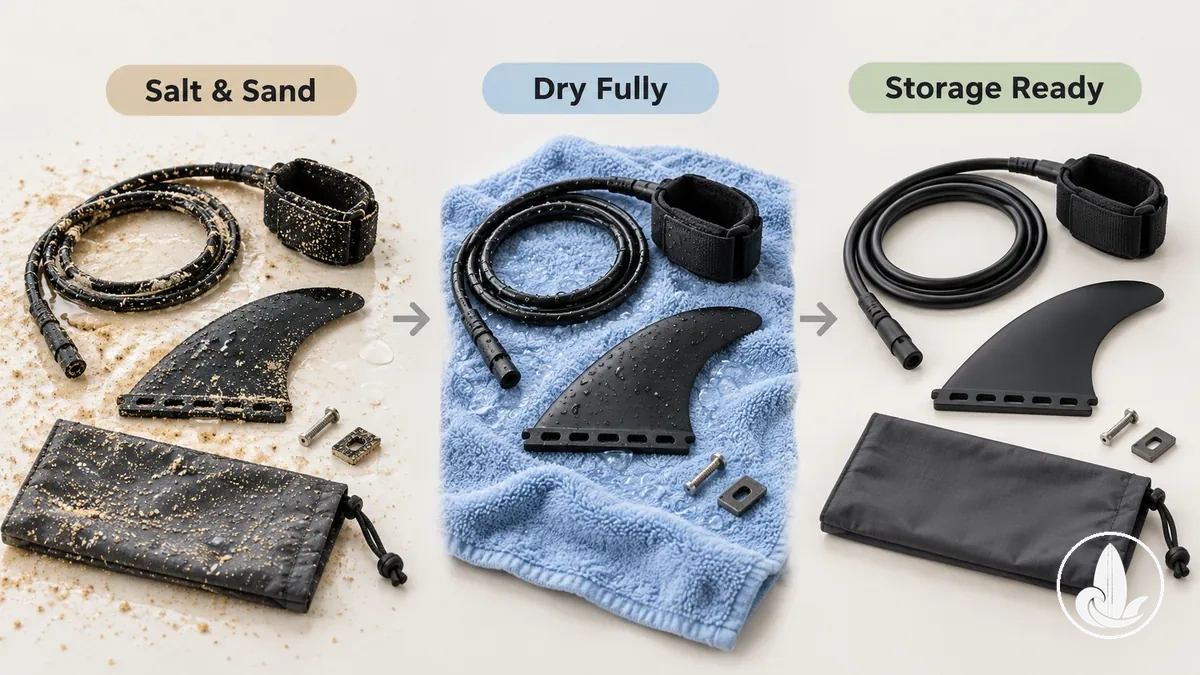
- Remove salt and sand. Brush off loose residue and rinse with fresh water where appropriate. This check is complete when no obvious salt, sand or dirt remains on the surfaces being stored.
- Dry the accessory fully. Keep it out of its storage enclosure while visible or accessible moisture remains; dry surfaces and accessible areas before the final check.
- Check moisture traps. Inspect folds, pockets, cases, attachment points and other areas where water may remain. Do not enclose or stack the gear while obvious trapped moisture is still present.
Pre-storage preparation is complete when the accessory is clean, suitably dry and ready to be enclosed or supported without trapping moisture.
Choose a Storage Area That Limits Heat, Sunlight and Moisture
Choose a storage area that is dry, shaded, reasonably ventilated and stable, with separation from direct sunlight, obvious heat sources, damp surfaces, leaks and avoidable contaminants. An indoor room or garage can work, but the location type matters less than the conditions around the stored gear.
Direct sunlight and persistent heat can add light and thermal stress, while dampness, condensation or poor airflow can keep moisture around accessories. A dry elevated surface can also reduce exposure to floor dampness, dirt and impact.
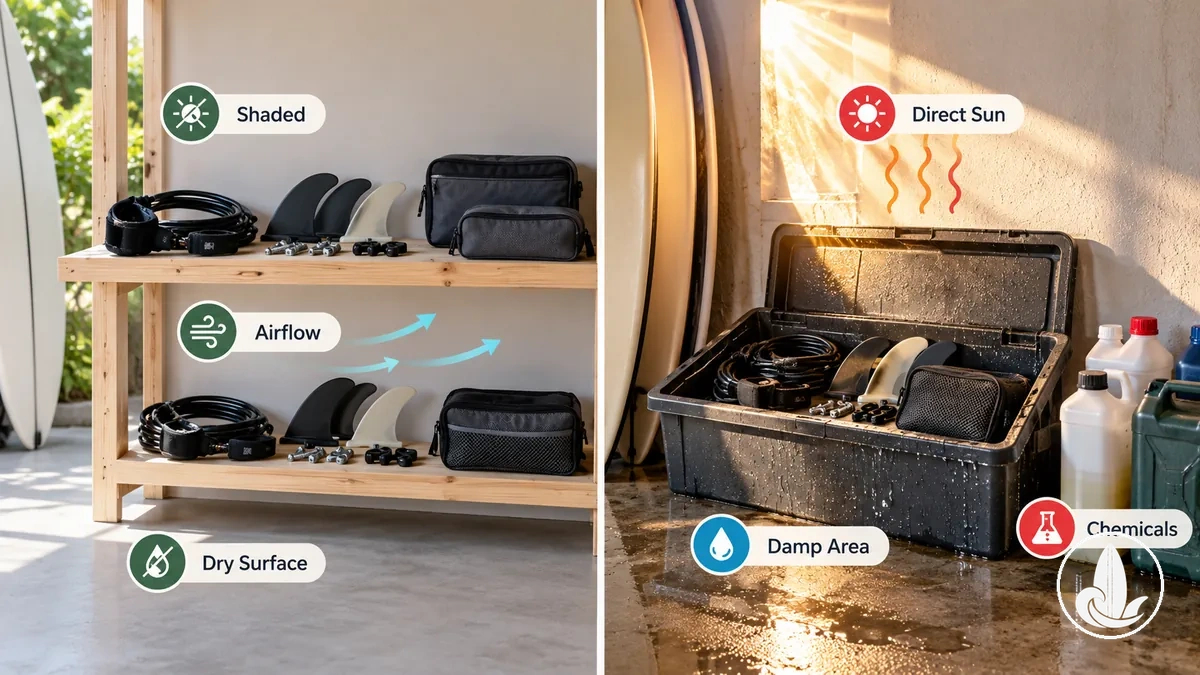
- Direct sunlight: Check whether sunlight falls directly on the stored accessories; a shaded position limits avoidable light exposure.
- Heat exposure: Avoid obvious heat sources and locations that become unusually hot; a more stable environment limits avoidable thermal exposure.
- Moisture and humidity: Look for damp surfaces, condensation, leaks or an enclosure that retains moisture; the gear should remain free from obvious retained moisture.
- Airflow: Prefer reasonable ventilation over stagnant, damp air so moisture can disperse rather than remain trapped around accessories.
- Floor and impact exposure: Keep gear off damp or dirty floors and out of positions where it is likely to be knocked.
- Chemicals and contaminants: Separate stored gear from chemical containers, spills and other contamination sources.
Organize Surfboard Accessories for Secure, Accessible Storage
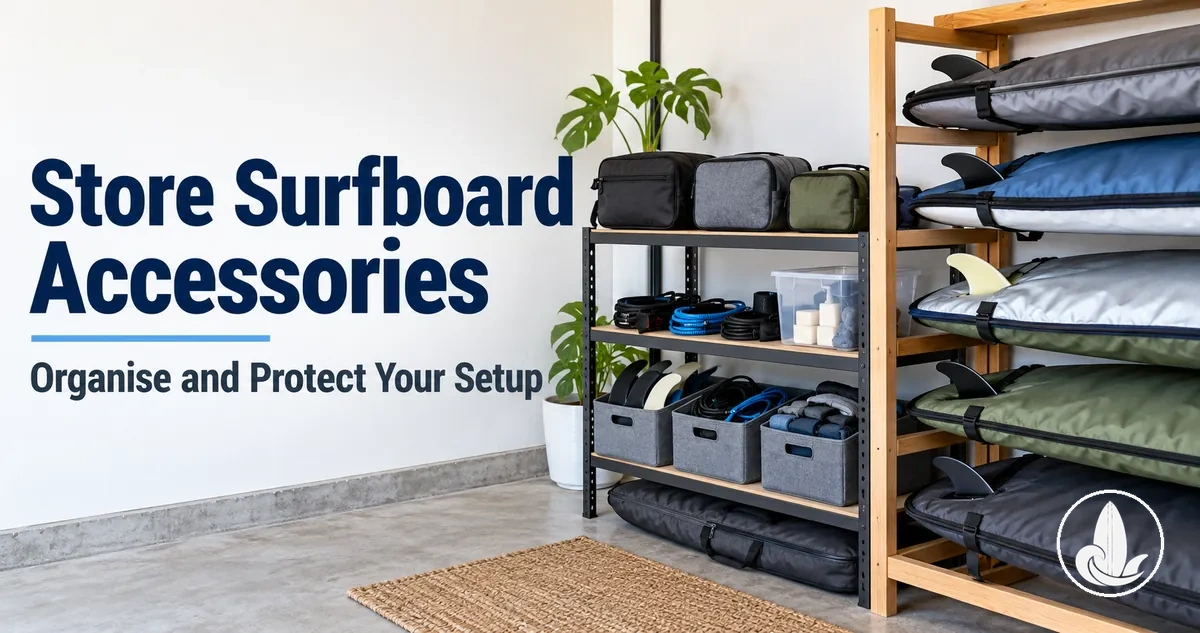
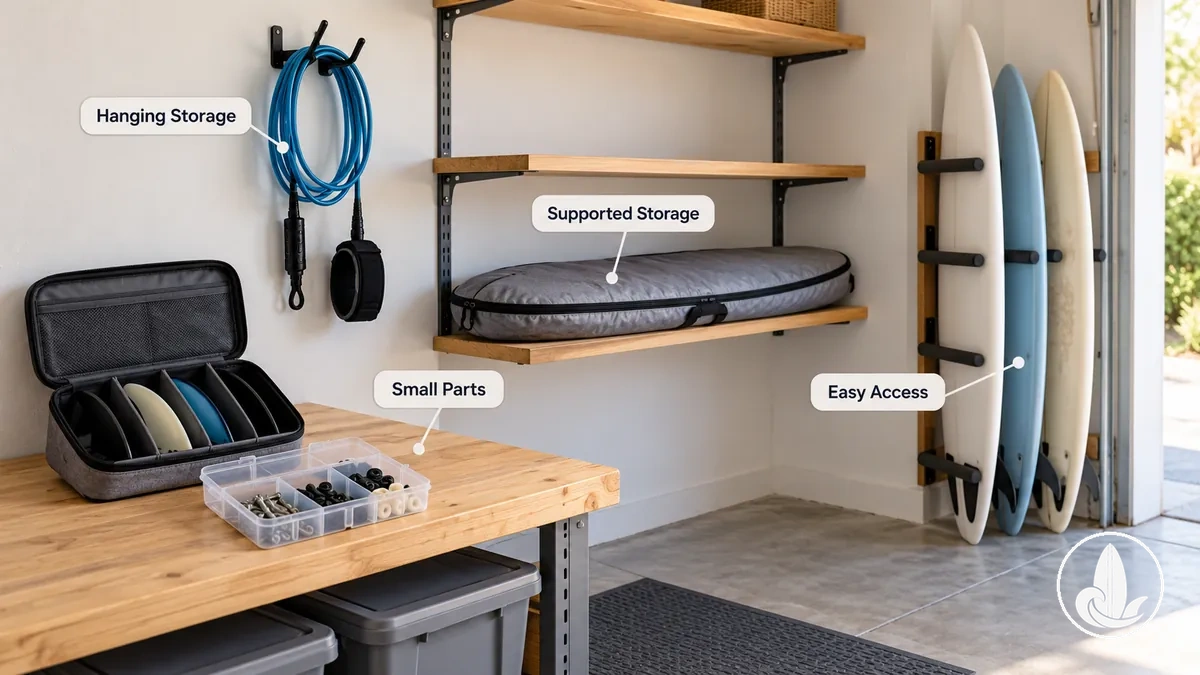
Organize surfboard accessories by matching each item's form and handling needs to the storage method: contain small parts, relax flexible gear, support soft items without compression, and keep frequently used gear easy to retrieve.
Small parts
Use a case, pouch or compartmented container so fins and related hardware stay separated, identifiable and together.
Flexible gear
Give leashes their own space and let them rest in a loose shape that avoids tangling, sharp bends and prolonged tension.
Soft bags and covers
Use a shelf or other supported placement where heavier items do not keep fabric or padding compressed.
Supported storage
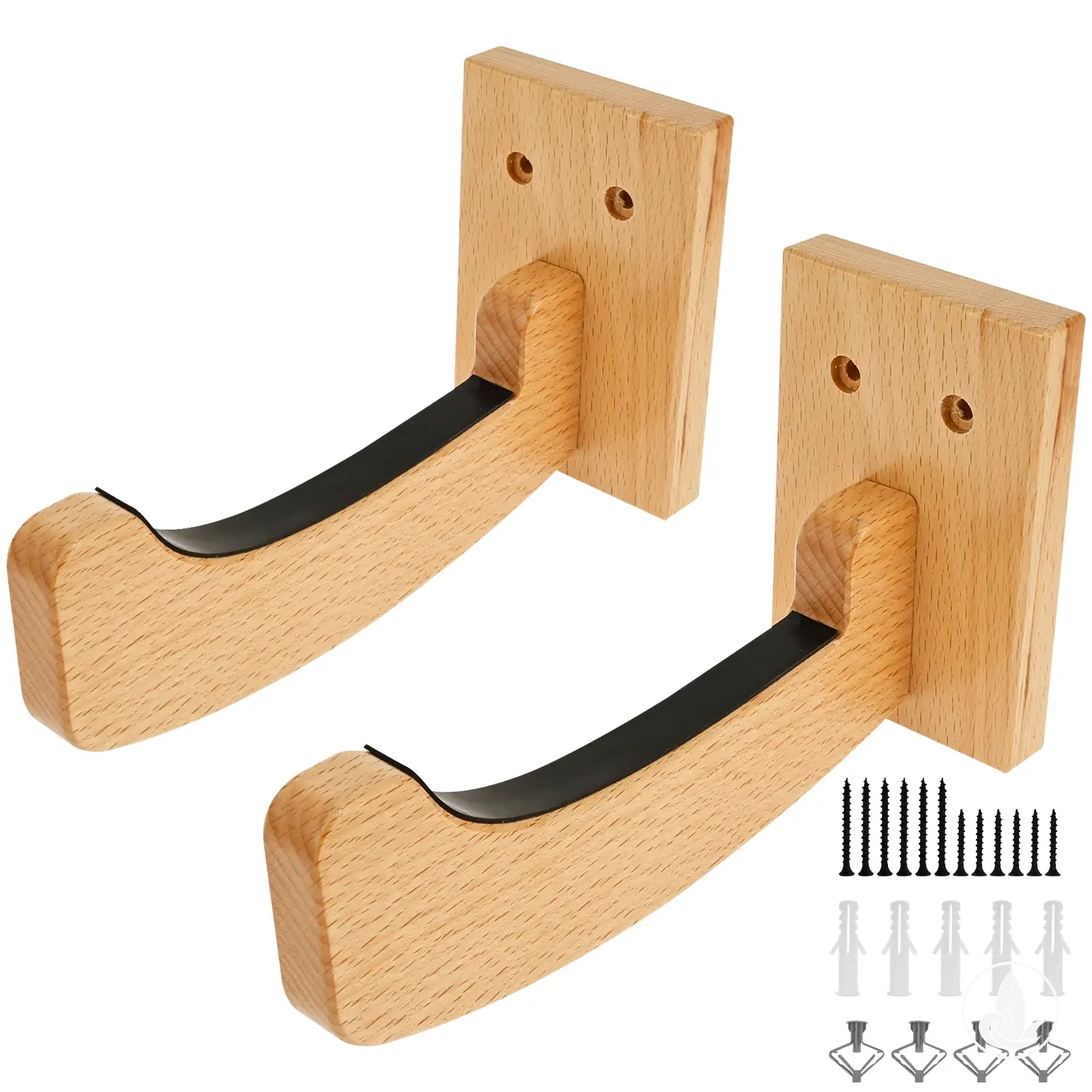
Use racks or hangers where broad padded contact and enough clearance keep the stored setup stable and easy to access.
In a garage or other small storage area, wall, shelf and floor space determine where these methods fit. The organizing principle does not change: preserve containment, support and a clear retrieval path rather than forcing every accessory into the same storage format.
Keep Fins and Small Hardware in Protective Cases or Organizers
For fin storage, keep fins in a case, pouch or organizer and place associated hardware in a separate, identifiable compartment instead of leaving the parts loose together.
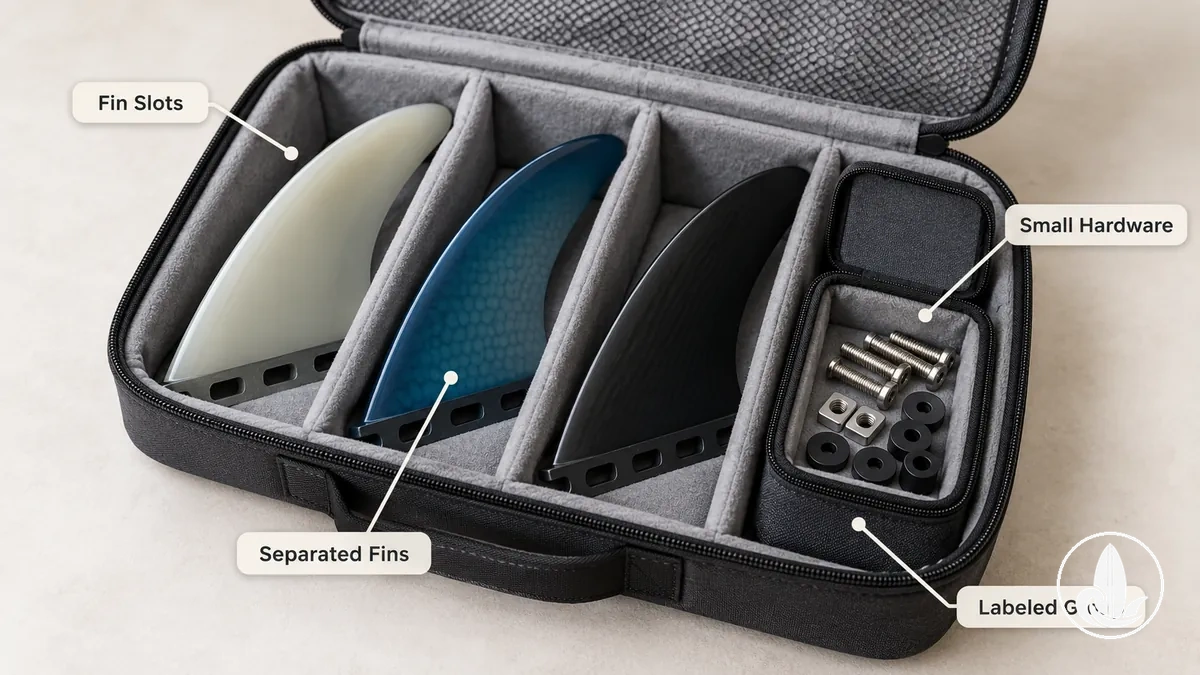
- Fin edges
- Keep fins separated with individual slots, pockets or compartments so their edges do not rest against each other unnecessarily.
- Small hardware
- Group related hardware in its own labelled compartment so parts are easier to retrieve and less likely to be mixed or misplaced.
- Removal from the board
- Whether fins are removed depends on the board and storage situation; when stored separately, keep each fin and its related hardware identifiable.
A generic storage case or compartmented container can provide this separation; the storage function matters more than a specific commercial design.
Store Leashes Loose and Dry to Avoid Kinks
Store a surfboard leash dry and in a loose, relaxed shape rather than forcing the cord into tight bends, compressed packing or prolonged tension.
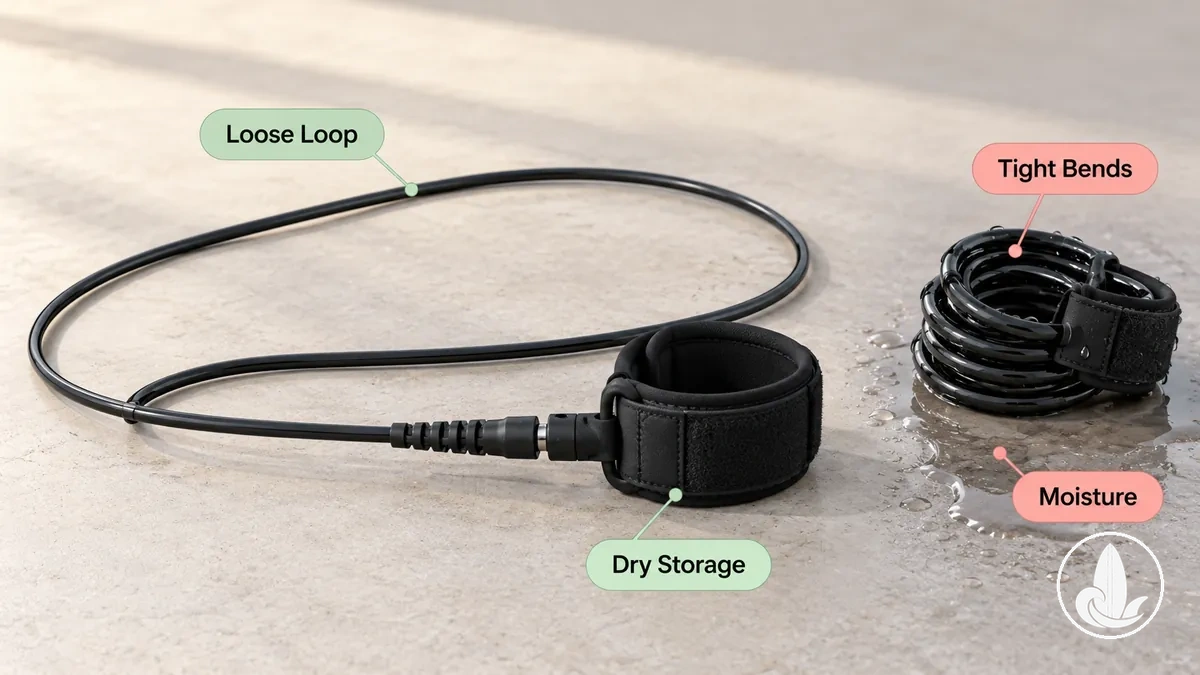
Store this way
- Dry the cord, cuff and accessible swivel areas before storage.
- Let the cord rest in a relaxed curve or loose loop.
- Keep heavy objects from pressing on the leash.
Avoid during storage
- Tight coiling that creates sharp bends.
- Heavy compression inside packed gear.
- Prolonged hanging tension or another constant load.
There is no single required coil or hanging shape. The practical condition is to prevent trapped moisture, sharp bends and prolonged mechanical stress, which can contribute to sticking, kinks or material stress depending on the leash construction and storage duration.
Store Bags, Covers and Board Socks Dry and Uncompressed
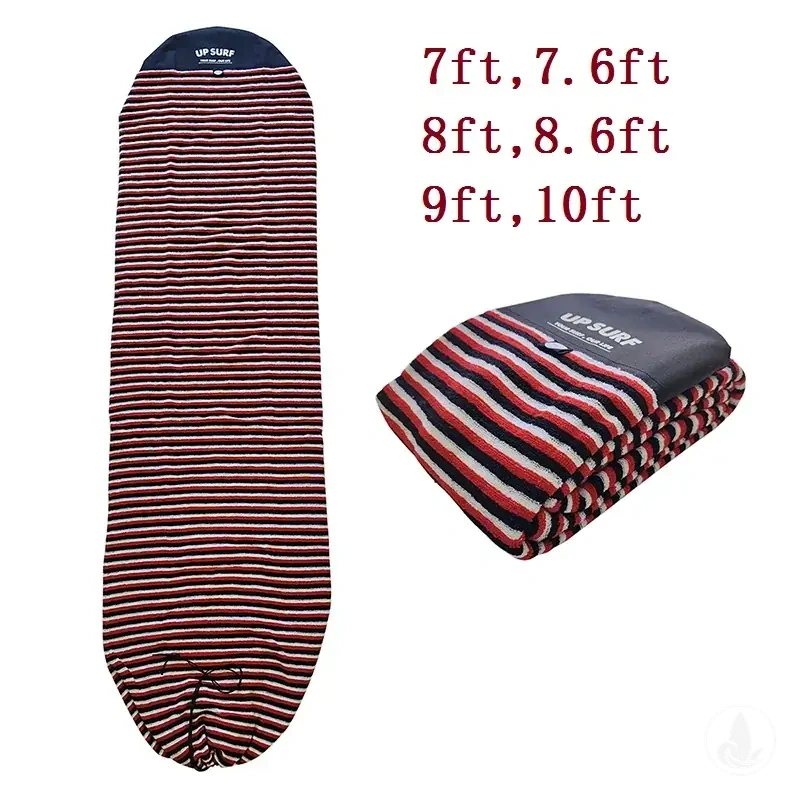
Store an empty surfboard bag, cover or board sock only after it is suitably dry. If fabric, seams, pockets or padding are still damp, let the item dry in a ventilated position before folding, rolling or shelving it.
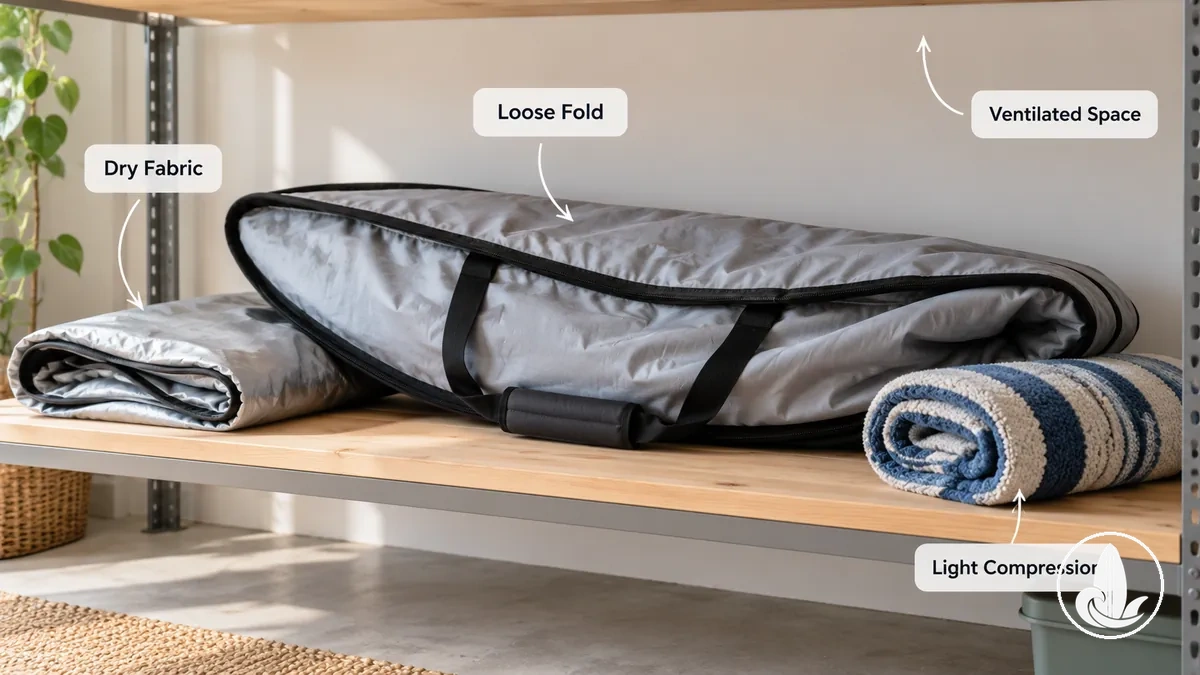
Dry before storage
Avoid enclosing or tightly folding material while obvious moisture remains, especially around padding, seams and pockets.
Use light compression
A loose fold or roll can save space; avoid leaving fabric or padding tightly crushed under a sustained load.
Support the item
Use a shelf or other stable surface where heavier gear will not continue pressing on the empty bag, cover or sock.
Watch material response
Moisture plus prolonged compression can contribute to odour, mildew, deep creasing or padding deformation where the construction is susceptible.
Important distinction: storing an empty bag or cover is different from deciding whether a surfboard should remain inside a protective bag. The first question is about the accessory's storage condition; the second is about board protection.
Use Racks and Hangers Without Creating Pressure Points
Use a rack or hanger so the stored setup rests on broad, padded and stable contact areas rather than concentrated pressure points, unstable edges or supports that allow slipping.
- Contact
- Use broad, suitably padded support where the stored setup actually touches the rack or hanger.
- Stability
- The load should sit securely without avoidable slipping, swinging or movement that can create impact or concentrated loading.
- Clearance
- Leave enough space from nearby gear, walls and other surfaces for the stored setup to remain stable and retrievable.
Orientation is secondary to support quality. Vertical and horizontal storage can both work when contact areas are padded and stable and the setup has enough clearance; neither orientation is universally better on its own.
Wall racks, ceiling systems and freestanding racks should all meet the same support conditions: stable contact, suitable padding and enough spacing to avoid concentrated pressure or unnecessary movement.
Protect Surfboard Accessories During Long-Term Storage
For seasonal or extended storage, start with clean, suitably dry accessories and maintain conditions that limit retained moisture, direct light, avoidable heat, prolonged compression and unstable support. The longer gear remains unused, the more important it is that those conditions stay stable.
Use the checklist below to verify the storage environment and support rather than relying on one fixed inspection interval.
- Clean and dry condition: Check that stored accessories remain free from obvious residue and retained moisture; damp or contaminated gear can be more susceptible to odour, staining, corrosion or material degradation where the construction is affected.
- Moisture and humidity: Check for condensation, damp surfaces, leaks or persistent humidity around the gear; these conditions can allow moisture to remain around stored accessories.
- Light and heat exposure: Check whether direct sunlight or an obvious heat source reaches the stored accessories; continued exposure can increase light or thermal stress on susceptible materials.
- Compression and unsupported weight: Check for heavy objects pressing on soft accessories or weight concentrated on small contact areas; prolonged loading can contribute to deep creasing, deformation or localised pressure where the material is susceptible.
- Enclosure and airflow: Check enclosed cases, bags or containers for trapped moisture or stagnant damp conditions; an enclosure should hold clean, dry gear without obvious retained moisture.
- Stable support: Check that a rack or other support holds the stored setup securely without slipping, unstable movement or concentrated pressure at vulnerable contact points.
Recheck the setup when the environment changes, after a leak or unusual heat event, or before returning stored gear to use. Orientation can remain vertical or horizontal as long as padding, contact, clearance and stability are suitable for the stored setup.
Product examples are shown for comparison after the storage criteria above; verify compatibility and current listing details before following a purchase path.