Surfboard Leash Safety and Selection Guide
Choose a surfboard leash by matching leash length roughly to board length, then matching cord thickness to the expected surf conditions and load; confirm the cuff, swivel, cord and board-side connection are intact. A leash helps retain the board after a fall, but it does not guarantee board control or protection, and it should be replaced when wear or degraded function compromises the retention path.
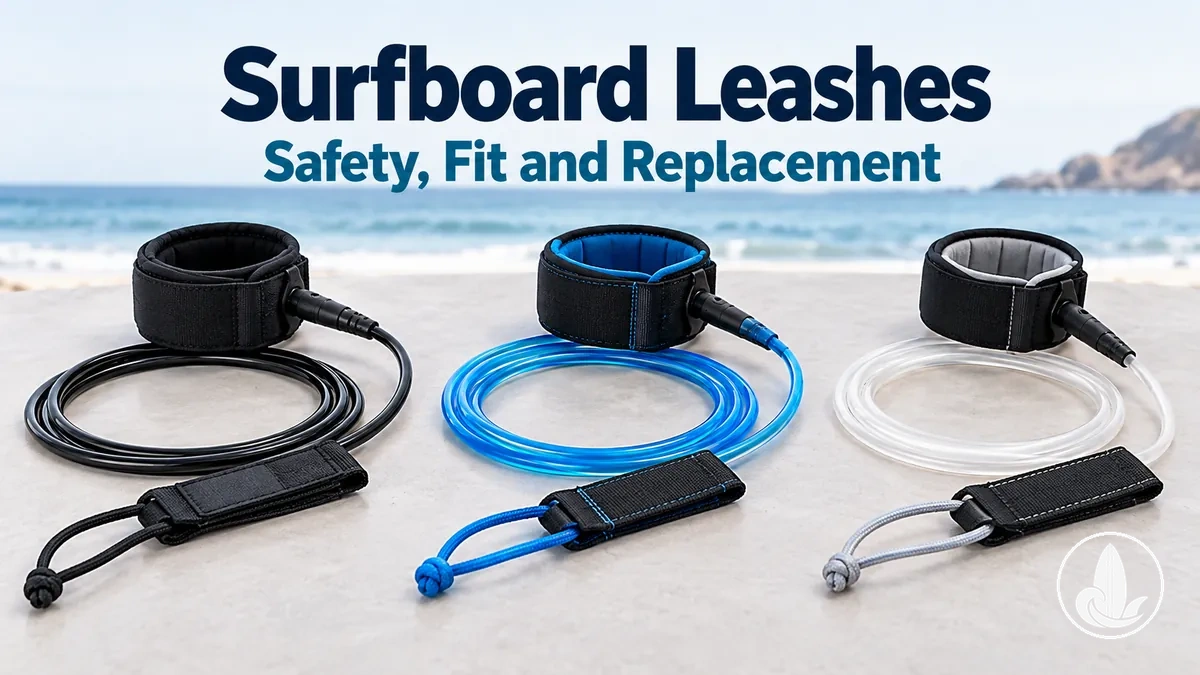
Decision support
Choose a leash by four checks
Use the board, expected surf, riding movement and component condition as separate decision inputs. No single measurement decides the whole setup.
- 1. Length
- Start with board length. A leash around the board's length is a practical reference; board type, intended use and manufacturer guidance can justify a different size.
- 2. Cord
- Match expected load. Thinner cord can reduce drag in lighter conditions; a thicker cord intended for more demanding conditions accepts the trade-off of more drag.
- 3. Cuff position
- Match movement and board use. An ankle cuff keeps the attachment low; a calf or knee cuff can move the cord farther from the feet during longboard cross-stepping.
- 4. Condition
- Inspect the full retention path. Fraying, tears, loss of elasticity, insecure closure, restricted or damaged swivels, or worn board-side connections can make replacement appropriate.
Safety boundary: a functioning leash supports board retention; it does not control the board after a fall and can itself tangle or fail.
Use the sections below to check the safety role first, then size, cuff position, connection integrity and replacement condition before comparing product examples.
Table of Contents
Surfboard Leash Function and Safety Limits
A surfboard leash is retention equipment: while it remains attached and functional, it limits how far the board separates from the surfer and can make board retrieval easier after a fall.
Supports
Board retention and retrieval. The connection can reduce runaway-board separation while the leash remains intact and attached.
Does not replace
Active board control and hazard awareness. The leash does not steer or stop the board after a fall.
Can lose its benefit
Tangling or component failure can reduce or remove retention and may introduce an additional hazard.

Treat the leash as a safety aid, not a guarantee. Its value depends on an intact retention path and on the surfer continuing to manage the board and surrounding hazards.
Choosing Leash Length and Thickness for Board Size and Surf Conditions
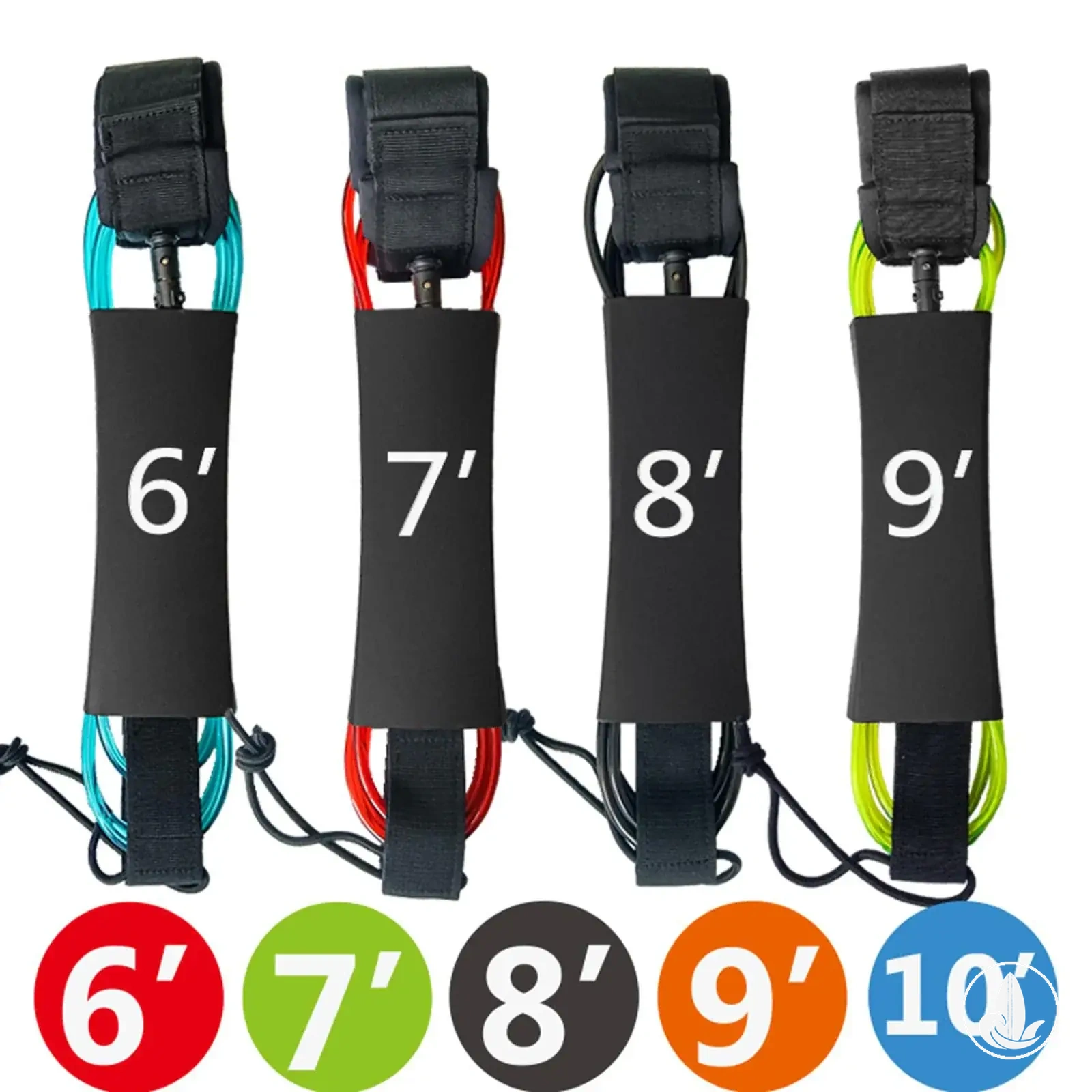
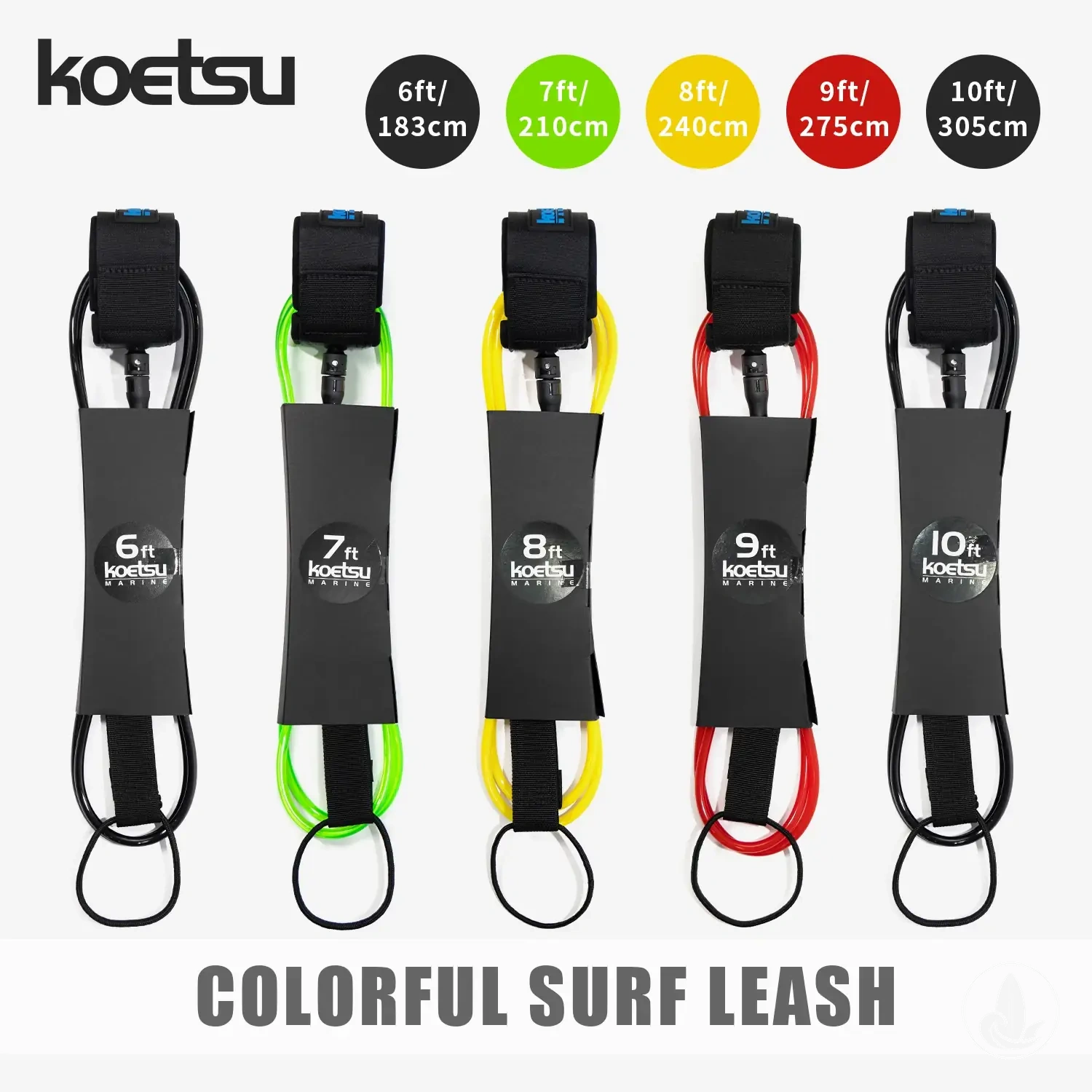
Leash sizing has two separate decisions: use board length and board type to choose leash length, then use expected surf conditions and load to choose cord thickness. These attributes solve different problems, so a longer leash is not a substitute for a stronger cord, and a thicker cord is not a substitute for correct length.
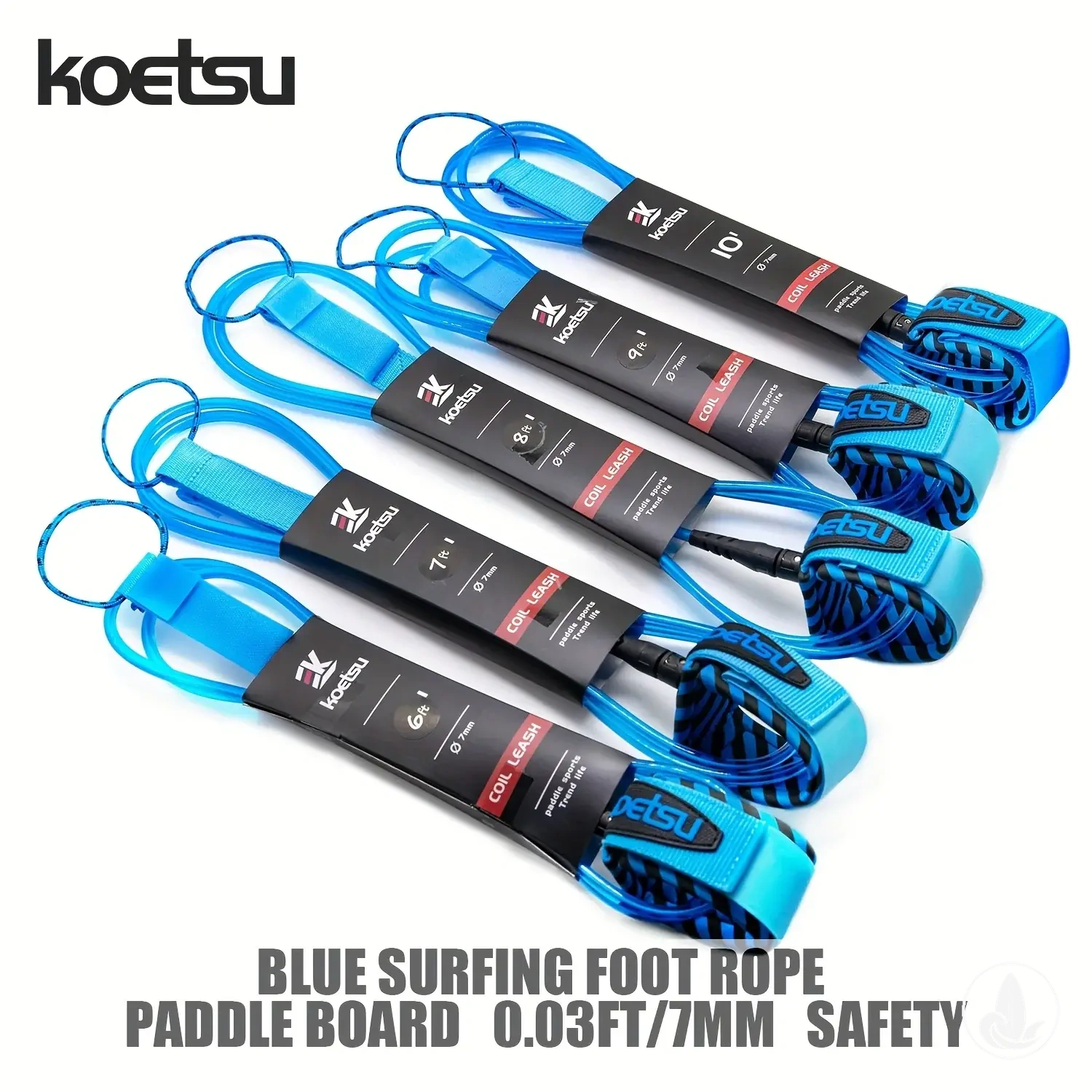
As an illustrative reference already used in published surf-leash guidance, a 7 ft leash for a 7 ft board represents an equal-length match; examples around 5–6 mm are associated with lighter-condition cords and 7 mm with more demanding use, but those figures are not universal performance thresholds for every construction.
| Leash attribute | Match it to | Trade-off | Decision cue |
|---|---|---|---|
| Leash length | Board length and board type | More length allows more separation but can increase drag or tangling exposure; less length reduces available separation | Use board length as the starting reference, then check manufacturer sizing guidance for the board type and intended use |
| Cord thickness | Expected surf conditions and load | Thicker cord provides more material for load tolerance with more drag; thinner cord reduces drag but provides less material for carrying load | Check the manufacturer's intended-use guidance; stronger surf warrants closer attention to cord specification and intended conditions |

For an unusual board, stronger surf or a setup outside an ordinary match, resolve length and cord thickness independently using the board type, intended use and the specific leash manufacturer's guidance.
Leash Length Relative to Board Length
Use board length as the starting reference for leash length. The final choice should still reflect board type, intended use and manufacturer sizing guidance.
- Starting reference
- A leash around the board's length provides a practical baseline; a 7 ft board with a 7 ft leash is an illustrative equal-length match.
- If the leash is materially shorter
- Available separation and clearance after a fall decrease.
- If the leash is longer
- Separation increases, but extra cord can add drag, slow retrieval and create more opportunity for tangling.
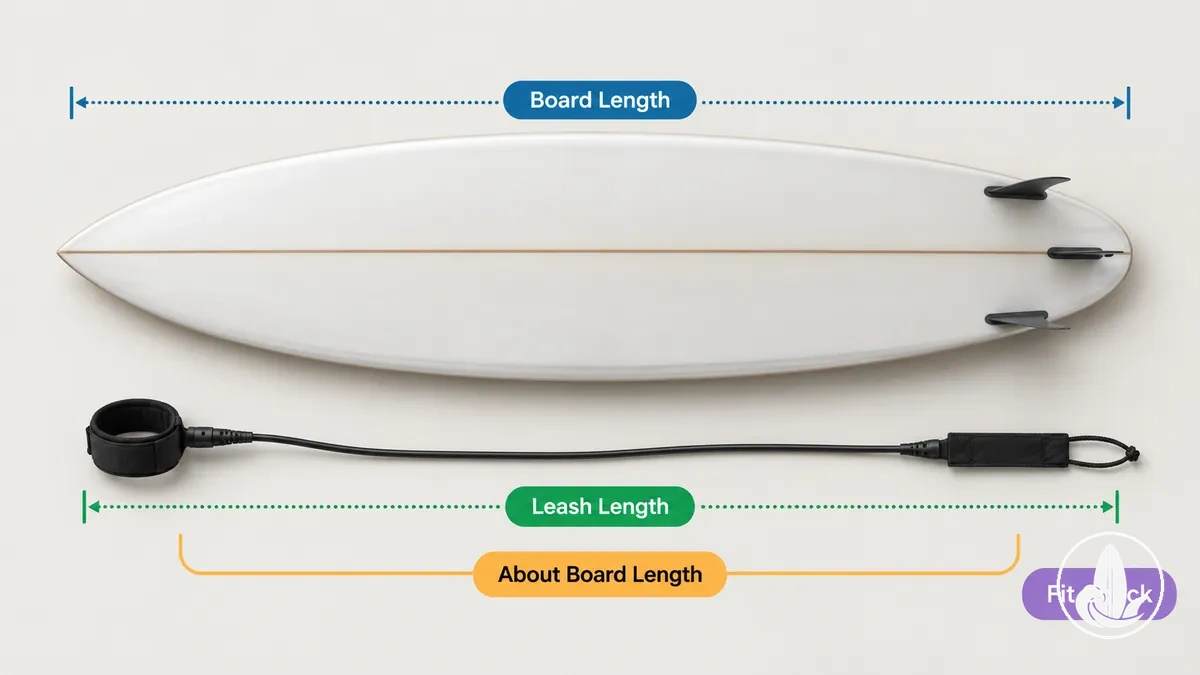
Aim for enough length for suitable clearance without unnecessary separation, then check the manufacturer's sizing guidance for the actual board and intended use.
Cord Thickness for Wave Conditions and Drag
Cord thickness is a drag-versus-load-tolerance decision. Diameter is only one attribute of the complete leash, so construction and condition still matter when judging reliability.
Thinner cord
Lower drag priority. It presents less material to the water and is better aligned with lighter expected loads when the leash is designed for those conditions.
Thicker cord
Higher load-tolerance priority. More material is available to carry load, with the trade-off of more drag when the leash is designed for more demanding conditions.

Choose the cord by matching the leash's intended conditions and load to the session, and check the specific manufacturer's guidance when suitability is critical.
Ankle vs Calf Leashes: Fit, Comfort and Tangling
Ankle and calf leashes differ mainly by cuff position. An ankle cuff keeps the attachment at the ankle; a calf or knee cuff sits higher on the lower leg, which changes comfort, retrieval reach and how much cord occupies the foot area.
For longboard riders who cross-step, moving the attachment higher can reduce cord interference near the feet; riders who prefer the lower cuff position and easy reach may favour an ankle leash. Neither position is universally better.
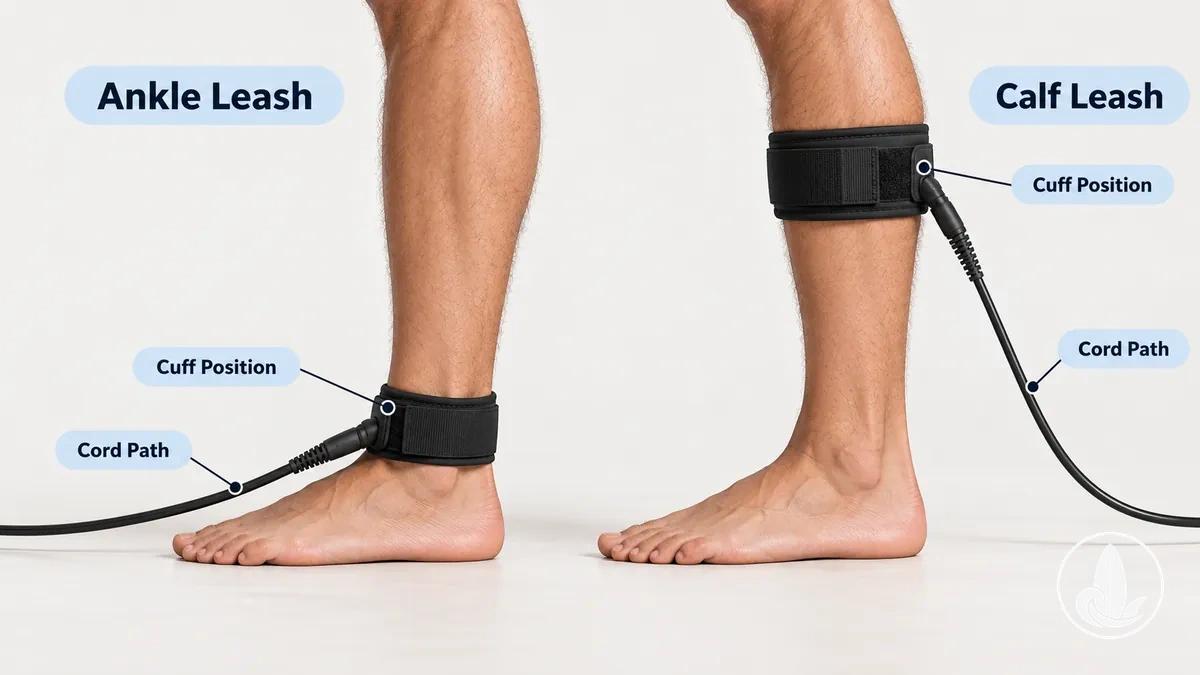
| Attribute | Ankle leash | Calf leash | Decision implication |
|---|---|---|---|
| Cuff position | Sits around the ankle | Sits higher on the lower leg, below the knee | Attachment position changes how the cuff and cord interact with leg and foot movement |
| Comfort | Boardcave describes ankle placement as more comfortable | Higher placement changes where cuff pressure is felt on the lower leg | Comfort is rider-dependent, so assess cuff fit during normal surfing movement |
| Foot-area tangling | The cord begins closer to the ankle and foot area | The cord begins higher on the lower leg and can stay farther from the feet during cross-stepping | Calf placement may suit riders whose movement repeatedly brings their feet across the cord path |
| Board retrieval | Boardcave describes ankle placement as easier for board retrieval | The higher attachment point changes how the rider reaches the leash during retrieval | Retrieval preference depends on which cuff position the rider can reach and handle comfortably |
| Relevant board use | Suitable when extensive movement along the board does not make the ankle-area cord path troublesome | Boardcave and The Inertia associate calf or knee leashes with longboard use where cross-stepping can make foot-area cord interference more relevant | Board use and movement pattern determine whether moving the attachment point higher offers a practical advantage |
Choose cuff position from movement pattern and fit: lower ankle placement favours the conventional low attachment and retrieval preference, while calf placement can prioritise foot-area clearance during longboard movement.
Leash Components and Connection Points That Affect Safety
A surfboard leash works as a continuous retention path from the surfer to the board. Reliability depends on every connection in that path remaining secure and functional.
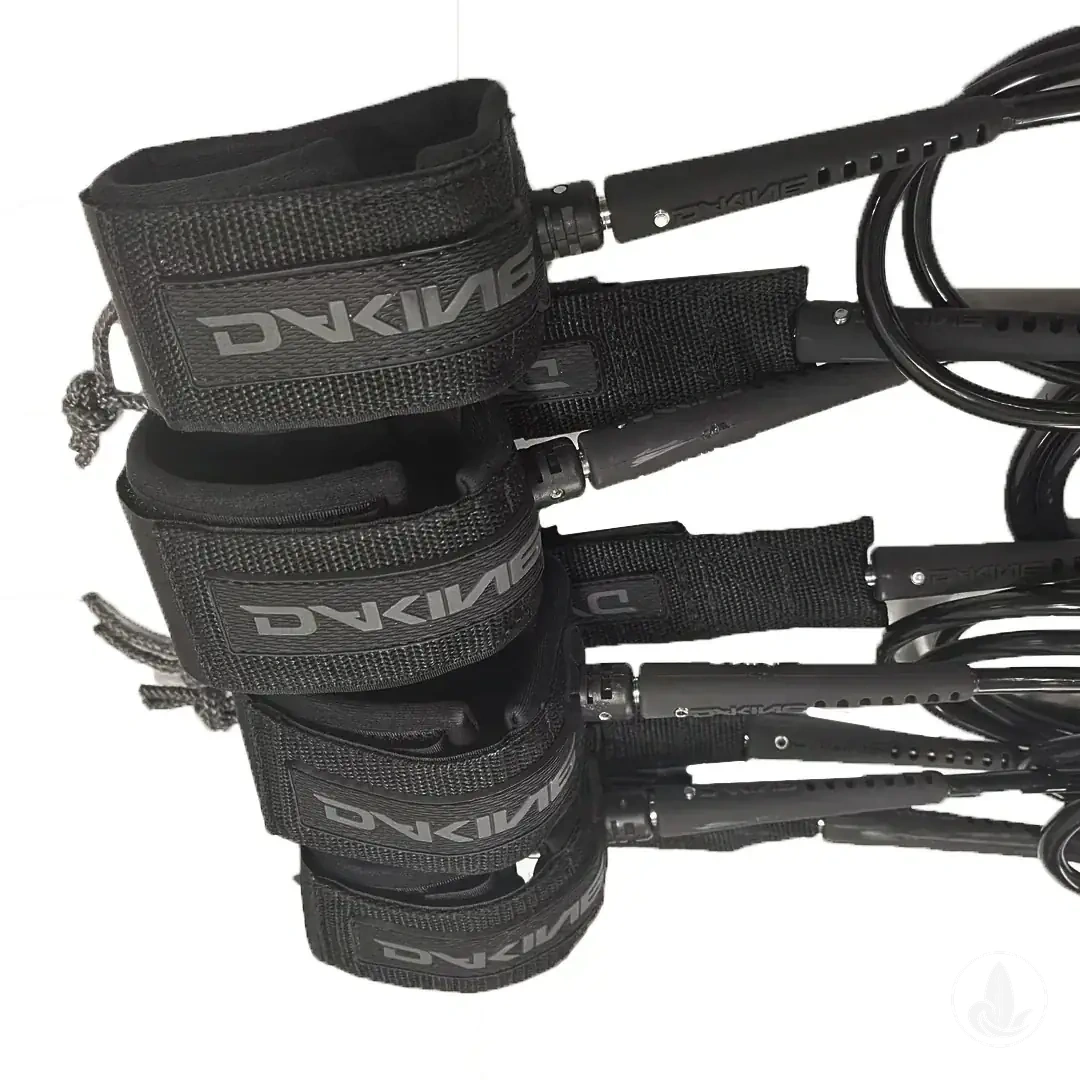
- CuffSecures the surfer-side attachment.
- SwivelAllows connected parts to rotate and helps limit avoidable cord twisting.
- CordCarries the connection and stretches under load according to its construction.
- Rail saverProvides a broader board-side contact area near the rail.
- Leash stringLinks the rail-saver assembly to the board's leash plug.
- Leash plugProvides the board-side anchor point for the connection.

A weak cuff, cord, swivel or board-side connection can interrupt load transfer and reduce retention. Inspect the complete path rather than relying on one component that looks sound.
Cuff, Swivels and Cord Function
The surfer-side components divide the job into fit, rotation and load carrying. Each function has a different failure mode.
- Cuff: A secure cuff closure and suitable fit maintain the rider-side connection; if the closure does not remain secure, retention can be reduced.
- Swivel: Free rotation lets connected sections turn relative to each other and limits avoidable cord twisting during movement; restricted rotation reduces that function.
- Cord: Elasticity allows the leash cord to stretch under load, while cord integrity maintains the load-carrying connection needed for retention.
Exact stretch and load capacity depend on the particular leash construction, so do not assume a universal strength value from cord diameter or appearance alone.
Rail Saver, Leash String and Plug Connection
The board-side connection combines the rail saver, leash string and leash plug. Their roles differ, but they must remain securely linked for the retention path to continue into the board.
- Rail saver
- Spreads the leash connection across a broader contact area near the rail, helping reduce concentrated cord contact.
- Leash string
- Provides the direct flexible link between the rail-saver assembly and the leash plug.
- Leash plug
- Acts as the board-side anchor point that receives the string connection.
If this board-side connection is insecure, frayed or damaged, load transfer becomes less reliable and retention can be compromised. Rail protection does not guarantee prevention of all rail damage; connection design, setup and condition still matter.
For installation, follow the board and leash manufacturer's setup instructions; functional integrity depends on secure, undamaged connections rather than on any single knot or component name.
Wear Signs That Mean a Surfboard Leash Should Be Replaced
Replace a surfboard leash when visible damage or degraded function compromises the retention path; age alone is not a universal replacement rule. Check the cord, cuff closure, swivels, rail saver and board-side connection for damage or loss of function.
| Leash part | Wear sign | Why it matters | Action |
|---|---|---|---|
| Cord | Fraying, tears, significant nicks, or noticeable loss of elasticity | Deterioration can reduce cord integrity and increase failure risk under load | Consider replacement when the damage or change in elasticity compromises cord integrity |
| Cuff or closure | Torn material or a cuff closure that no longer remains secure | An insecure cuff closure can compromise the surfer-side connection and retention | Replace when the closure cannot maintain a secure connection during intended use |
| Swivel | Visible damage or rotation that has become restricted or unreliable | Restricted rotation can increase twisting, while physical damage can compromise connection reliability | Consider replacement when damage or poor rotation compromises the connection |
| Rail saver | Fraying, tears, or substantial wear in the connection material | Compromised material can weaken the board-side load path and reduce the rail saver's protective function | Replace when deterioration compromises the integrity of the board-side connection |
| Leash string or connection | Fraying, damaged material, or an insecure connection | Compromised connection material can reduce retention and increase separation risk under load | Replace compromised connection material when its condition no longer supports a secure connection |
Surface dirt or cosmetic marks call for care and inspection when integrity is unaffected; fraying that removes material, an insecure cuff closure, damaged or restricted swivels, loss of useful elasticity, or a compromised board-side connection are replacement signals when they affect function.
Before comparing replacement options
- Length: confirm the size is appropriate for the board and intended use.
- Cord: match thickness and intended load to the expected surf conditions.
- Cuff: choose ankle or calf placement from fit, movement and board use.
- Connections: check cuff closure, swivels, rail saver, leash string and board-side connection details.
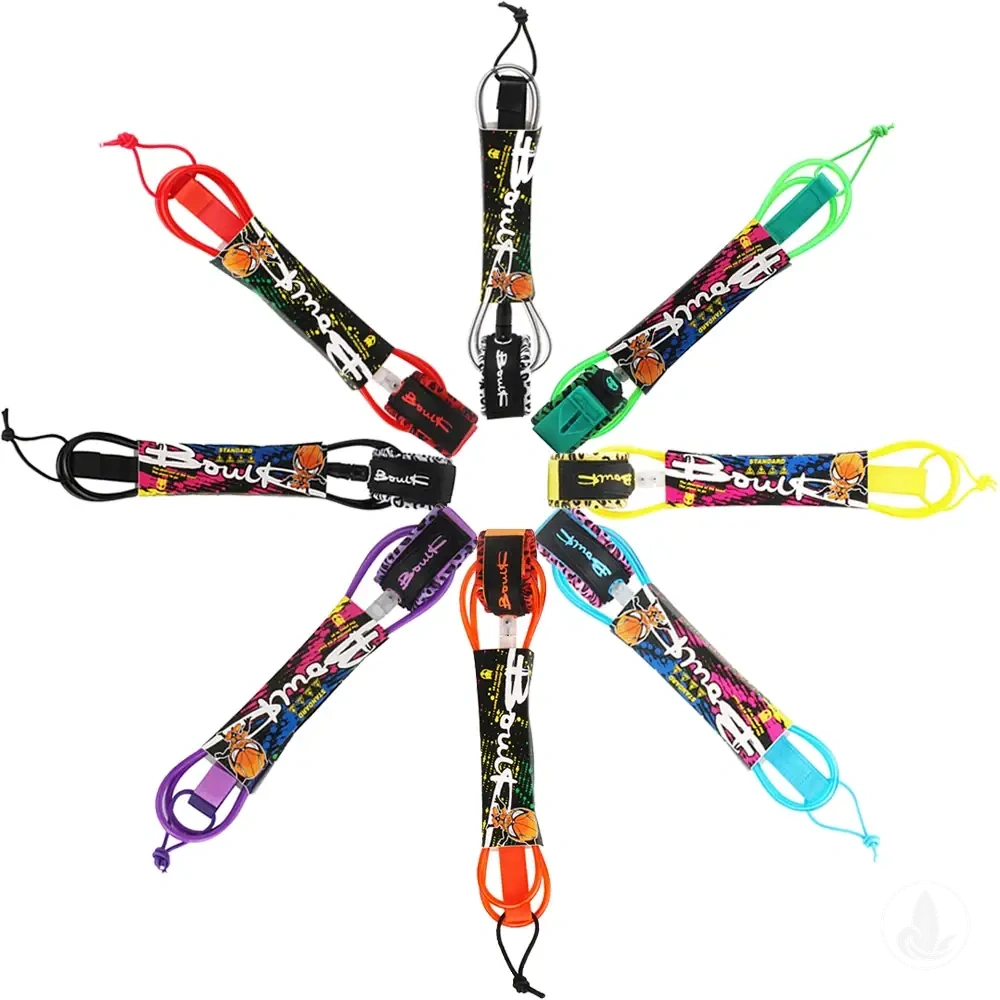
The product examples below are optional comparison starting points after the fit and condition checks above.
Before following a product link, verify the listed size, cord specification, cuff type and connection details against your board and intended conditions.