
Surfboard Fin Compatibility and Selection Guide
Choose surfboard fins by compatibility first: match the fin base to the board's fin system, fin box or plug, and supported fin configuration. Only then narrow compatible options by fin size, surfer weight, board dimensions or volume, wave conditions, surfing style, and the desired balance of hold versus release. FCS, FCS II, Futures and longboard centre-fin systems are not universally interchangeable.
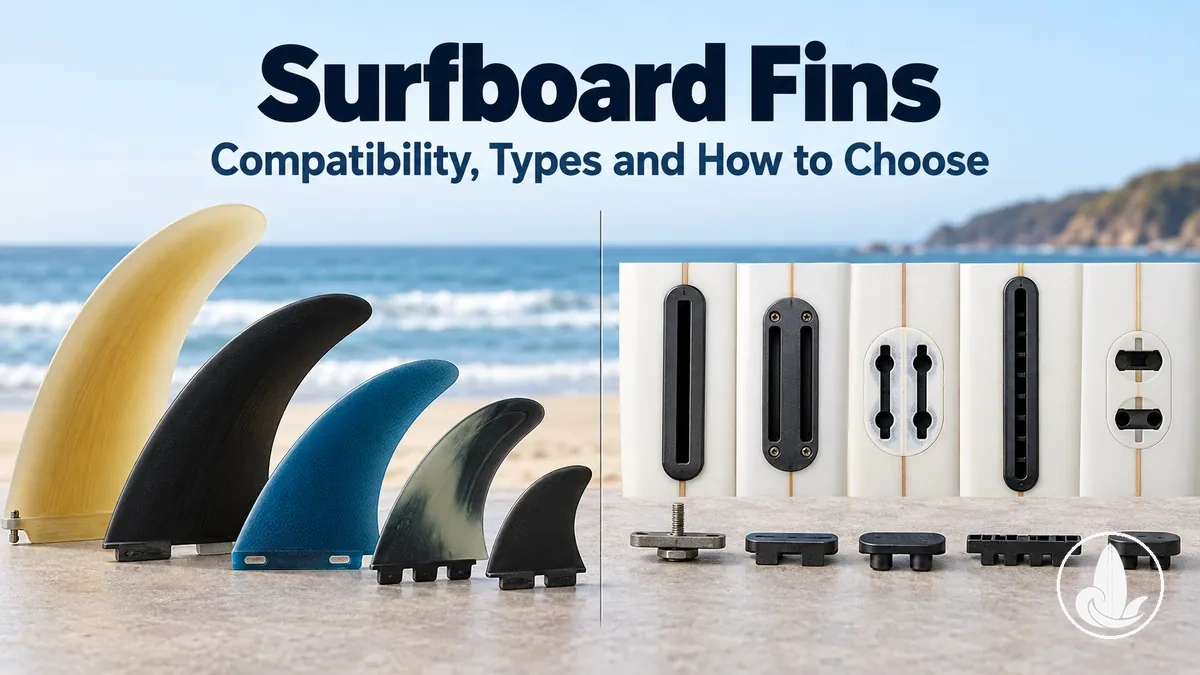
Choose surfboard fins in four filters
Use the filters in order. A fin that fails a physical fit check is excluded before performance characteristics are compared.
- Match the mounting systemIdentify the board's FCS, FCS II, Futures, longboard centre-box, or other documented interface and match the fin base and fastening condition.Mismatch → not compatible
- Confirm the supported setupUse only a single, twin, thruster, quad, or multi-box configuration that the board's fin-box layout is designed to support.Unsupported layout → exclude the setup
- Narrow the fin sizeStart with the manufacturer's size guidance for that fin range, then refine it with surfer weight, board dimensions or volume, and the complete fin setup.Size labels are range-specific, not universal
- Refine the handling biasGreater area or depth generally favours hold and control; less area or depth generally favours easier release. Rake, base, cant, foil and flex further modify the response.Choose the trade-off that suits the board, waves and surfing style
Selection rule: physical fit determines the candidate set; setup, size and design determine which compatible option best matches the intended handling.
Start with what the fins do, then compare setups, mounting systems and design attributes before using the final selection criteria.
Table of Contents
What Surfboard Fins Do and How They Affect Board Control
Surfboard fins are board-mounted control surfaces that interact with water to help the board maintain direction and respond to steering input.
By resisting sideways movement through the water, surfboard fins contribute to directional stability and hold, while their interaction with water also affects release and turning response.
The degree of each effect remains conditional on the board design, fin setup, surfer input, and wave conditions.
Their functional role is therefore hydrodynamic control and stability as the board changes direction.

Fin geometry, placement, and stiffness can change board response by changing how and where the fins interact with water during a manoeuvre.
The fin setup changes the number and arrangement of control surfaces around the tail, while geometry, placement, and stiffness alter the way those surfaces respond under load; the resulting handling response remains conditional on the board, fin configuration, surfer input, and wave conditions.
The detailed effects of fin size and individual design attributes are considered separately where those attributes can be compared directly.
Surfboard fins
Control through water interaction. Fins resist sideways movement and influence hold, directional stability, release and turning response.
Deck traction
Grip at the surfer-to-board contact point. A traction pad helps the surfer maintain foot contact; it does not replace the hydrodynamic role of the fins.
Common Surfboard Fin Setups and Their Handling Characteristics
A fin setup changes the number and arrangement of working fins around the tail, which changes the balance of control, stability, drive, release, and turning response.
A single fin uses one centre fin, a twin fin uses two side fins, a thruster uses two side fins plus one centre fin, and a quad uses four fins without a centre fin.
Configurable multi-box boards provide fin boxes for more than one supported fin configuration.
| Fin setup | Fin arrangement | Typical handling tendency | Relevant context |
|---|---|---|---|
| Single fin | One centre fin | Directional stability with a smoother, more drawn-out turning tendency | Often associated with longboard-style surfing; the response remains dependent on board design and conditions |
| Twin fin | Two side fins with no centre fin | Looser release and a freer turning tendency than a comparable centre-fin configuration | The degree of looseness and drive changes with board shape, fin position, and wave conditions |
| Thruster | Two side fins plus one centre fin | Balanced control, stability, and turning response | The centre fin adds control between the two side fins, with the overall response shaped by the board and conditions |
| Quad | Four fins arranged as two side pairs with no centre fin | Drive and hold with a different release and turning balance from a thruster | The handling tendency changes with board design, fin position, surfer input, and wave conditions |
| Configurable multi-box | Multiple fin boxes supporting more than one fin configuration | Handling follows the supported fin setup in use | The available configurations are limited by the board's fin-box layout |
On a board designed around a twin fin, removing the centre-fin position from the working setup can favour a looser release, while a thruster places a centre fin behind the two side fins to shift the balance toward added control and stability.
A quad also has no centre fin, but its four-fin arrangement distributes the working fins along both sides of the tail, producing a different balance of drive, hold, release, and turning.
These tendencies remain conditional on board design, fin position, surfer input, and wave conditions rather than defining a universally superior setup.
The setup geometry is visible in the tail layout: a single fin sits on the centreline, a twin places one fin on each side, a thruster adds a centre fin behind two side fins, and a quad places two fins on each side without a centre fin.
Comparing the tails in the same orientation makes the differences in fin count and position clear.

For example, on a configurable board whose fin boxes support both arrangements, choosing a thruster rather than a quad introduces a centre fin and therefore changes the balance of control, hold, release, and turning response.
The practical trade-off remains conditional on the board design, wave conditions, and surfer preference, and the chosen fin setup must stay within the configurations supported by the board.
Surfboard Fins Are Not Universal: Fin Systems Determine Compatibility
Surfboard fins are not universal because the board's installed fin system constrains which fin base can fit its fin box or plug.
Compatibility must be verified before fin size, shape or other performance preferences are considered.
Systems such as FCS II and Futures use different attachment formats, so the first compatibility check is to identify the mounting system installed on the board.

If the fin system is unclear, work from the board to the fin rather than assuming interchangeability: identify the fin box or plug standard, identify the corresponding fin base, then verify any generation-specific or fastening condition that applies.
A compatible fit requires the attachment standard and fin base to correspond, together with any additional condition specified for that system or generation.
Use these checks to make the fit decision:
- Identify the board system: determine whether the board uses FCS, FCS II, Futures, a longboard centre-box standard, or another documented attachment system.
- Identify the fin base: compare its tab, base, or attachment format with the fin box or plug standard on the board.
- Verify the specific condition: check whether the system generation, fastening requirement, or applicable longboard standard adds another condition to compatibility.
Related fin systems should not be assumed to provide blanket backward compatibility merely because their names or fin bases appear similar; fit can depend on the specific generation and any required fastening condition.
Longboard centre-fin compatibility can likewise depend on the particular box and fin-base standard, so system-specific interchangeability needs to be resolved at that narrower level.
Fin Box Type Determines Which Fin Base Will Fit
The board's fin box or plug type determines which fin base can fit because the mounting base must correspond to the receiving attachment point.
Compatibility requires the base form and tab pattern to match that interface, together with any fastening condition required by the identified system.
Visible attachment features such as the box or plug form and the fin's tab arrangement provide the local criteria for deciding whether the combination is a fit, a conditional fit, or not a fit.

Interchangeability Differs Between FCS, FCS II, Futures and Longboard Systems
FCS, FCS II, Futures, and longboard fin systems should not be treated as one interchangeable standard; compatibility depends on the exact fin box generation, fin base, and any required fastening condition.
Original FCS fins use two tabs secured with grub screws, while FCS II fins use a two-tab, tool-less locking interface designed for FCS II boxes. Futures uses a single elongated base secured in its corresponding box, and a common longboard centre-fin arrangement uses a centre fin box with a matching fin base.
The comparison below distinguishes these attachment patterns and the conditions that qualify a fit.

| System | Attachment pattern | Typical compatibility condition | Important caveat |
|---|---|---|---|
| FCS | Two-tab fin base secured with grub screws | The fin base must correspond to the applicable FCS plugs or a compatible FCS II box condition | Original FCS fins can be used in many FCS II boxes when secured with the appropriate screws, but compatibility should still be checked for the specific fin and box |
| FCS II | Two-tab fin base with a tool-less locking interface for FCS II boxes | FCS II fins require the FCS II box interface | FCS II fins should not be assumed to fit original FCS plug systems simply because both use two-tab fin bases |
| Futures | Single elongated fin base seated in a corresponding box and secured by its fastening system | A Futures-format fin requires a corresponding Futures-format fin box | Its single-base interface is physically different from the FCS and FCS II two-tab formats |
| Longboard | Centre-fin base fitted to a compatible centre fin box | Compatibility depends on the particular centre-box and fin-base standard | Longboard configurations should not all be assumed to use an identical box or fastening condition |
Related fin system names do not by themselves make fins interchangeable: FCS-to-FCS II compatibility can depend on generation and fastening conditions, while Futures uses a different single-base interface.
Longboard compatibility likewise needs to be qualified by the centre fin box and fin-base standard rather than inferred from the board category alone.
These conditions determine compatibility and fit; the separate procedure for installing a fin is outside this comparison.
Fin Size and Design Change Hold, Stability, Release and Turning Response
Fin size and fin design affect hold, control, stability, release, and turning response through interacting attributes rather than one dimension alone.
A larger fin or greater area generally tends toward more hold and control, while a smaller or shallower fin tends toward easier release. Depth, base, rake, cant, foil and flex further shape the handling response.
The strength of these tendencies remains conditional on the board, fin setup, surfer input, and wave conditions.
The comparison below separates these attributes and their likely handling implications.
| Fin attribute | Relative value or condition | Likely handling effect | Decision implication |
|---|---|---|---|
| Size or area | Larger area versus smaller area | Greater area tends toward more hold and control; less area tends toward easier release | Use fin size as a hold-versus-release trade-off while accounting for the board, fin setup, surfer input, and wave conditions |
| Depth | Deeper versus shallower | More depth tends toward greater hold and stability; less depth tends toward easier release and turning | Consider depth according to the balance of directional hold and release required from the complete fin setup |
| Base | Longer versus shorter base | A longer base tends to support more drive through a turn, while a shorter base reduces that contribution | Consider base length together with the complete fin outline rather than as an isolated handling rule |
| Rake | More swept-back versus more upright | More rake tends toward a longer turning arc; a more upright outline tends toward a tighter pivoting response | Relate rake to the desired turning character while accounting for the rest of the fin geometry |
| Cant | Greater versus lower outward angle | Cant changes how a side fin engages as the board is turned and loaded | Evaluate the angle with fin placement, board design, setup, and wave conditions because those factors modify the resulting response |
| Foil | Different cross-sectional profiles | The profile changes water flow around the fin and can alter stability, control, and response | Consider foil in relation to fin position and setup rather than treating the profile as an independent outcome rule |
| Flex | Stiffer versus more flexible | A stiffer fin tends toward a more immediate response, while greater flex changes how the fin loads and releases under pressure | Treat flex as a response trade-off because neither greater stiffness nor greater flex is preferable across every board and condition |
On a board where more hold and control are useful, a larger fin can favour those characteristics relative to a smaller fin, while the smaller option can favour easier release; the practical difference also depends on its depth, outline, and the rest of the setup.
A stiffer fin tends toward a more immediate response under load, whereas greater flex changes how pressure builds and releases through a turn.
Cant changes the side fin's angle relative to the board, so its handling effect is also shaped by fin placement, setup, surfer input, and wave conditions.
The size-and-design illustration below makes the relative fin sizes, base and depth directions, flex or stiffness difference, and cant angle visually comparable.

For example, a larger, deeper fin can favour hold and stability where the board and wave conditions benefit from more resistance to sideways movement, while a smaller or shallower fin can favour easier release where a freer turning response is preferred.
A more upright outline can favour a tighter pivoting response while greater rake can favour a longer turning arc, but board design, fin setup, surfer input, and wave conditions can modify both tendencies.
Choosing Among Compatible Surfboard Fins
Choose among compatible surfboard fins by treating physical compatibility with the board as the first filter, then using performance preferences to narrow the options that remain.
The fin system and fin base must satisfy the board's fit requirements before fin setup, fin size, or handling preference becomes relevant.
A fin that does not meet that compatibility condition should be excluded even if its other characteristics appear suitable.
Fit determines which fins are candidates; preference determines which compatible option is more suitable.
If several fins fit the board, move from the supported fin configuration to the remaining selection criteria rather than comparing every available fin.
Confirm which fin setup the board supports, such as a thruster or quad where applicable, then narrow those compatible options by fin size and the handling characteristics relevant to the surfer.
Use this order to move from physical compatibility to a suitable option set:
- Match the fin system: confirm that the fin base and required fastening condition are compatible with the board.
- Confirm the fin setup: choose only a fin configuration supported by the board's fin-box layout.
- Narrow the fin size: use the applicable manufacturer's size range as a starting point, with surfer weight and the board as relevant sizing variables.
- Refine the handling: compare compatible options according to surfing style, wave conditions, and the desired balance of hold, control, stability, release, and turning response.
For a surfer choosing between already-compatible options, fin size should be refined using surfer weight and board context rather than treated as a universal medium-or-large rule.
Within an applicable size range, surfing style and wave conditions can then narrow the choice according to the preferred balance of hold, control, release, and turning response.
These criteria define the suitable option set without making a size label a fixed performance outcome, leaving specific sizing trade-offs to the sizing guidance that follows.
A compatible fin is not automatically the suitable choice simply because it fits: fin setup, fin size, board, surfer weight, surfing style, and wave conditions still refine the compatible options.
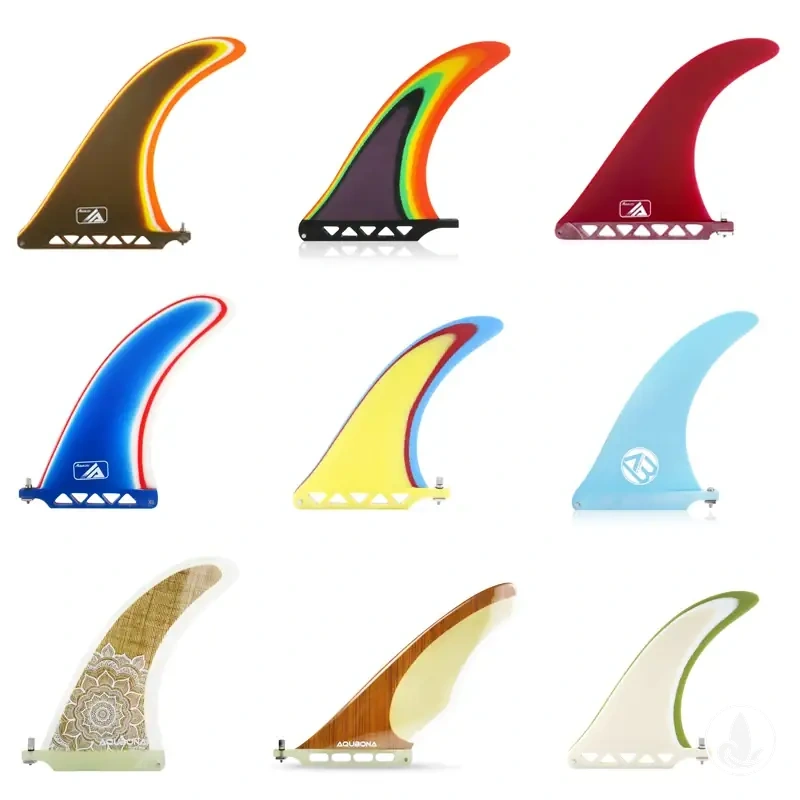
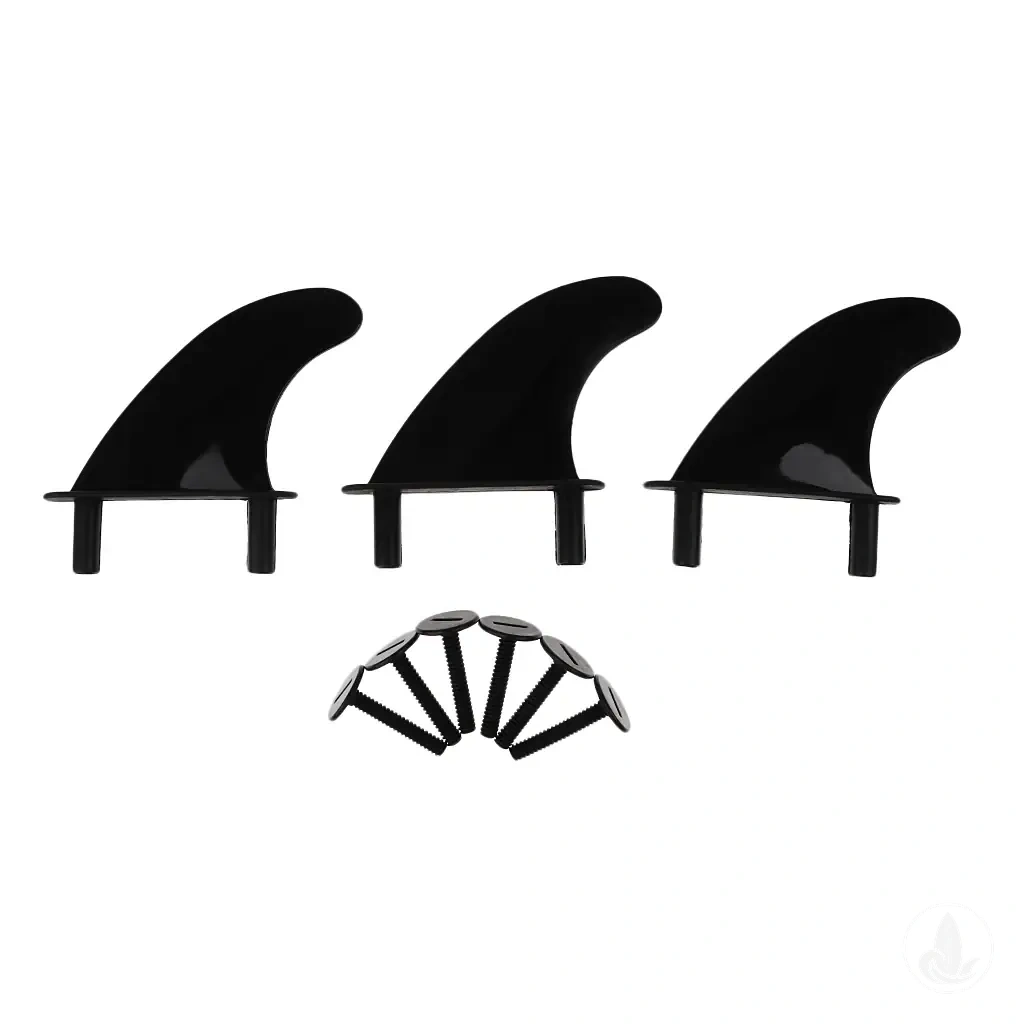
Choosing among compatible surfboard fins is also separate from deciding whether worn or damaged fins or attachment hardware should be repaired or replaced; equipment condition should be assessed separately before completing the selection decision.
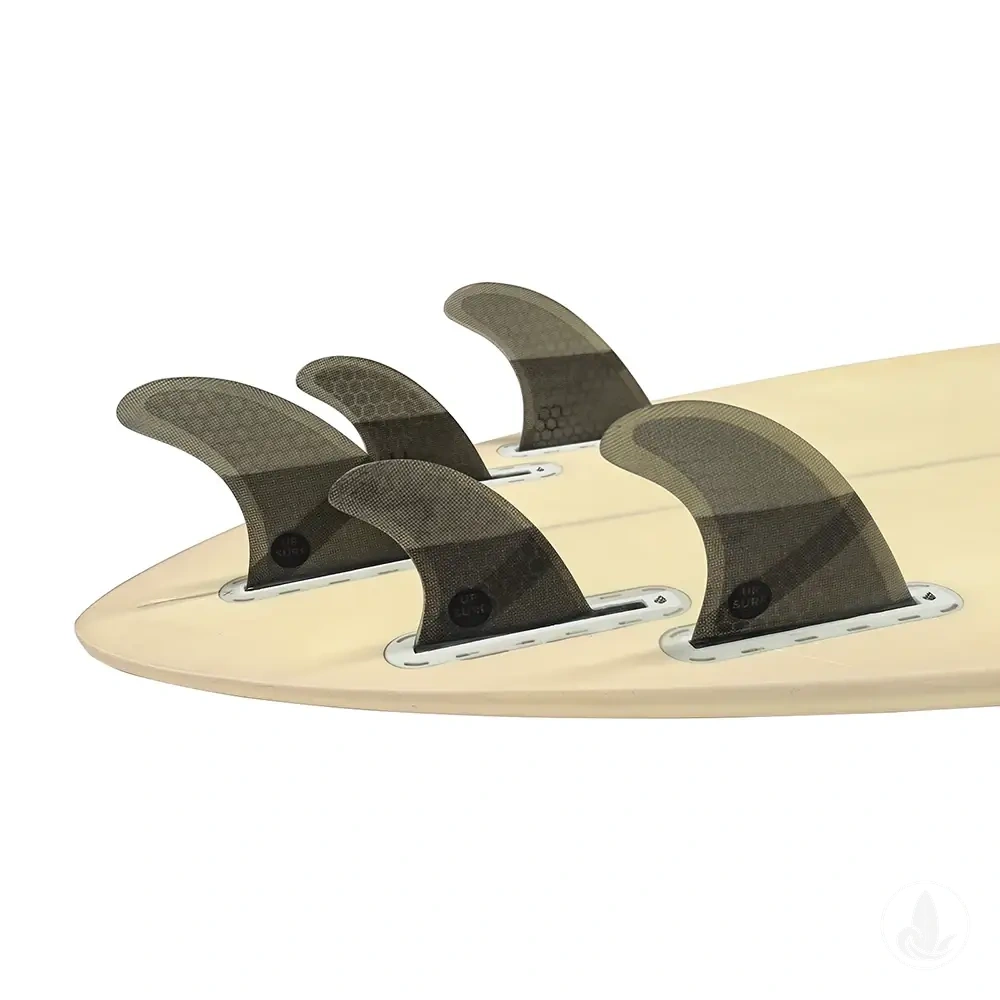
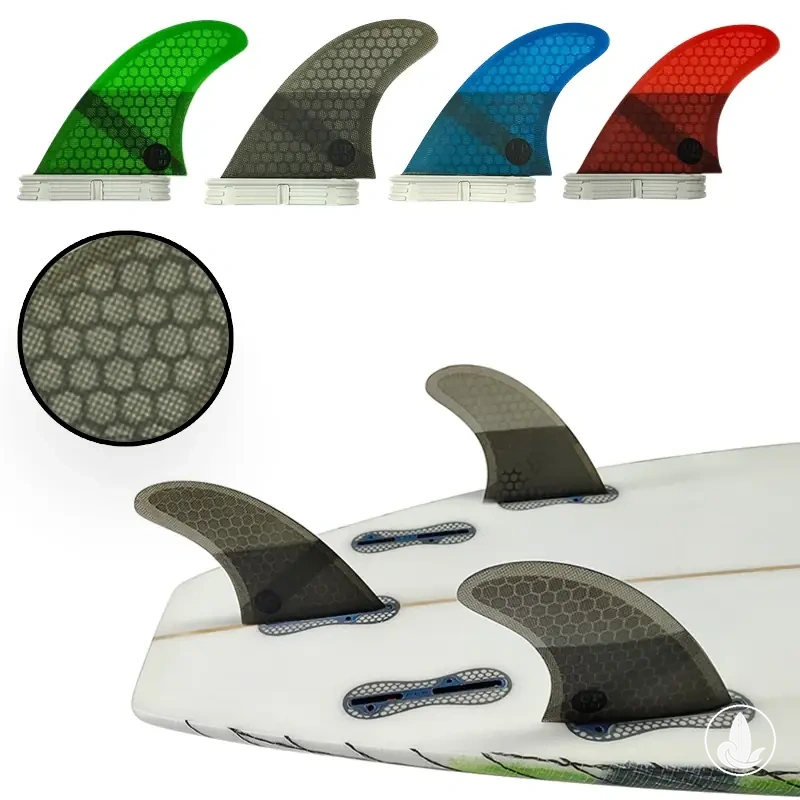
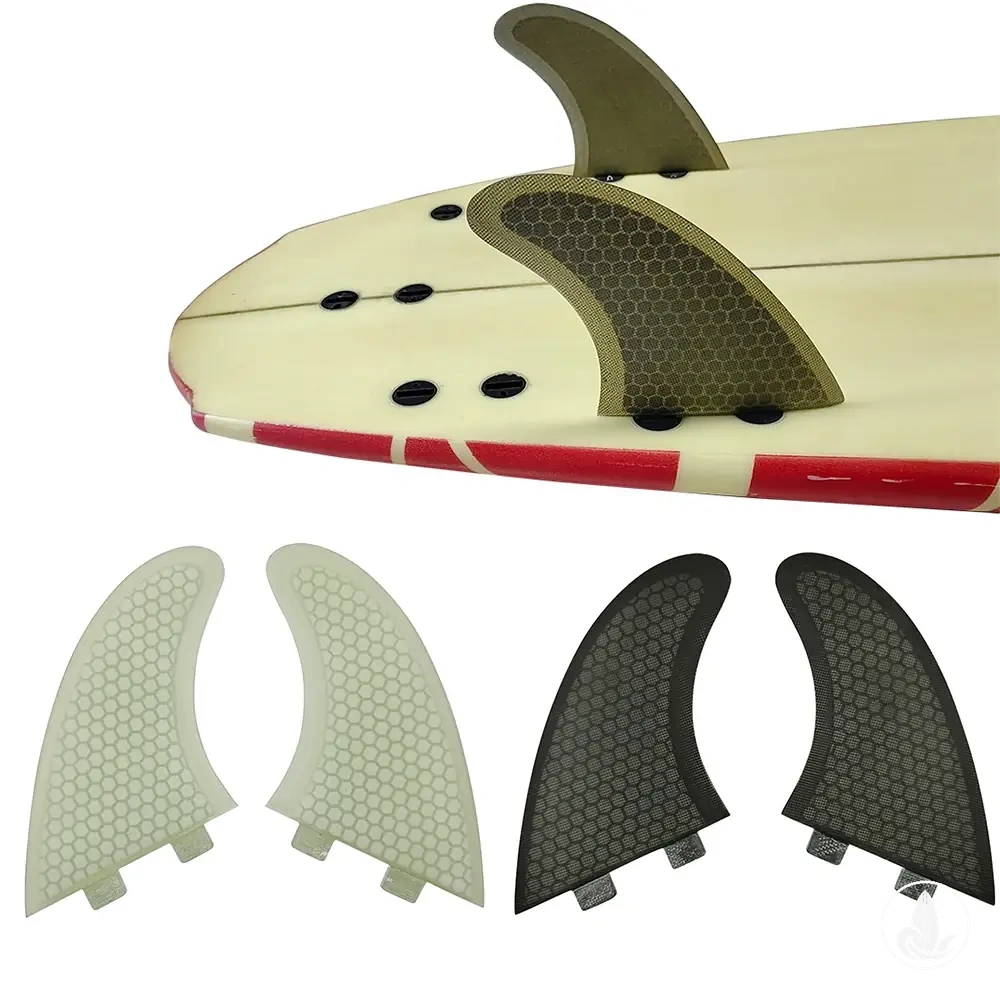
Surfer Weight and Board Dimensions Narrow the Suitable Fin Size
Surfer weight and board dimensions narrow the suitable fin size rather than determine one exact size. Use the manufacturer's size guidance for the specific fin range as the starting point, then refine that range with the board and fin setup.
- Surfer weight
- Provides a starting sizing band when the manufacturer uses rider weight in that fin range.
- Board dimensions or volume
- Add context for how much board is being controlled and can help refine the choice within the supported sizing range.
- Fin setup
- Changes how the total fin area is distributed, so the same rider may choose differently across single, twin, thruster or quad configurations.
- Specific fin range
- Controls the actual size labels and bands; a generic “medium” or “large” label should not be treated as universal across manufacturers or models.
Two surfers of similar weight can reasonably choose different sizes when their boards or fin setups differ, and the same surfer can choose differently across different boards. The practical sequence is manufacturer size band → board context → fin setup → handling preference.
Wave Conditions and Surfing Style Refine the Fin Choice
Wave conditions and surfing style refine the fin choice only after compatibility, fin setup and a plausible size range have narrowed the options. Wave power, steepness or softness, and the way a surfer loads a turn can shift the preferred handling balance without making one fin characteristic universally best.
Favour easier release
In smaller or softer waves, or when quicker direction changes are the priority, an already-compatible option with less area or depth can favour a freer, more responsive release. Board design and surfer input still modify the result.
Favour more hold
In steeper or more powerful waves, or when maintaining engagement under stronger turning pressure is the priority, an already-compatible option with more area or depth can favour hold and control. The full fin geometry and board still matter.
Use wave conditions and surfing style as final refinements among compatible options, not as substitutes for mounting-system fit, supported setup or appropriate sizing.