
Surfboard Repair Tools and Accessories for Common Repairs
Basic surfboard repair tools suit minor, localised damage when the tool or material matches both the repair function and the board construction. Check damage scope first, then construction, then material compatibility; buckling, snapping, heavy delamination, complex fin-box damage or uncertain water intrusion should be assessed beyond a basic repair-tool scope.
Repair-tool decision assistant
Choose a repair-tool profile from the damage, task and board construction
Use the three checks below to narrow the relevant tool or material category. The result is a selection guide, not a substitute for product instructions or assessment of structural damage.
Start with damage scope. If the damage is minor and localised, choose the tool category by function; if resin is involved, identify the board construction before choosing the resin system.
For common repairs, the useful distinction is not “which kit has the most pieces?” but which repair function is needed, which construction will contact the material, and whether the damage is still localised.
Table of Contents
Common Surfboard Damage Suited to Basic Repair Tools
Basic repair tools are generally suited to minor, localised surface damage such as a small ding, crack, puncture or scratch. The defect should remain contained rather than showing broader deformation, delamination or structural breakage.

Usually within basic-tool scope
- Small, localised ding, crack, puncture or scratch.
- No visible buckling, snapping or major change to board shape.
- No heavy delamination around the defect.
- Board construction and compatible repair material can be identified.
Needs broader assessment
- Water intrusion appears extensive or its extent is uncertain.
- Heavy delamination, buckling, snapping or severe deformation is visible.
- The fin box or surrounding laminate appears structurally damaged.
- The damage extends beyond a localised surface defect.
Visible size alone does not determine repair scope. Damage extent, location, water intrusion, board construction and structural effect are the more useful selection conditions.
Main Types of Surfboard Repair Tools and Supplies
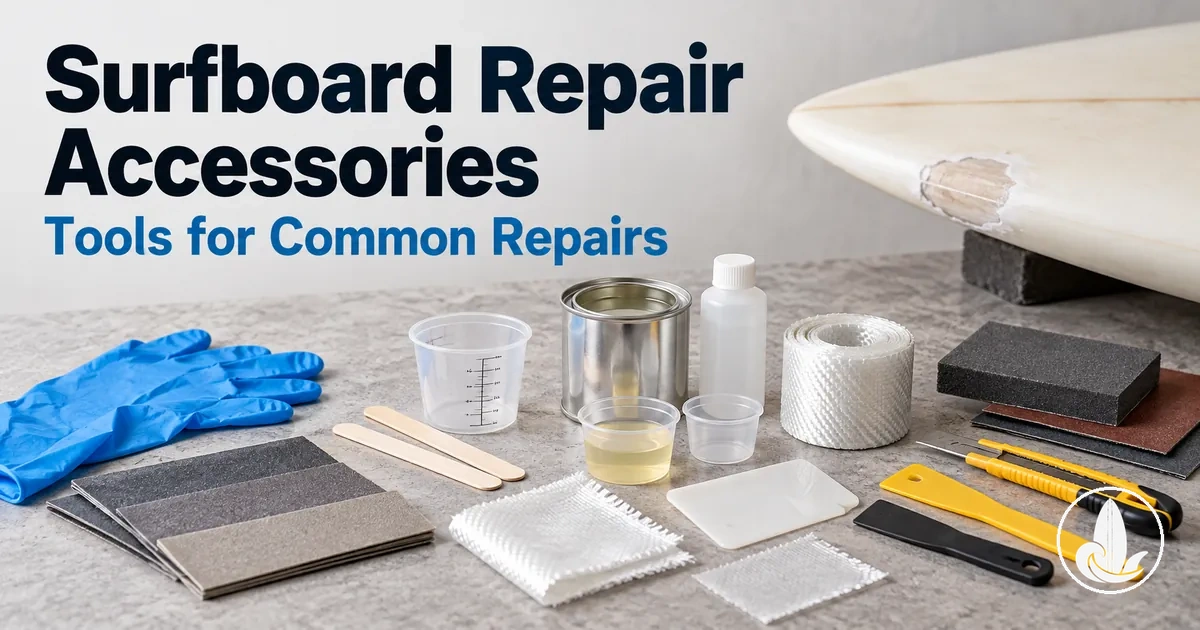
Surfboard repair tools and supplies fall into four functional groups according to the job they perform. Selecting by function keeps repair materials, quick fixes, preparation tools and fin hardware semantically distinct.

Repair kits and resin systems
Used when the repair needs filling or reinforcement. Typical components include compatible resin, fibreglass cloth, filler and the curing component specified for that resin system.
Patches and quick-fix materials
Used to cover or temporarily seal a small, localised defect when reinforcement is not the primary function.
Sanding, mixing and preparation tools
Used for abrasion, measuring, mixing and controlled application according to the requirements of the chosen repair material.
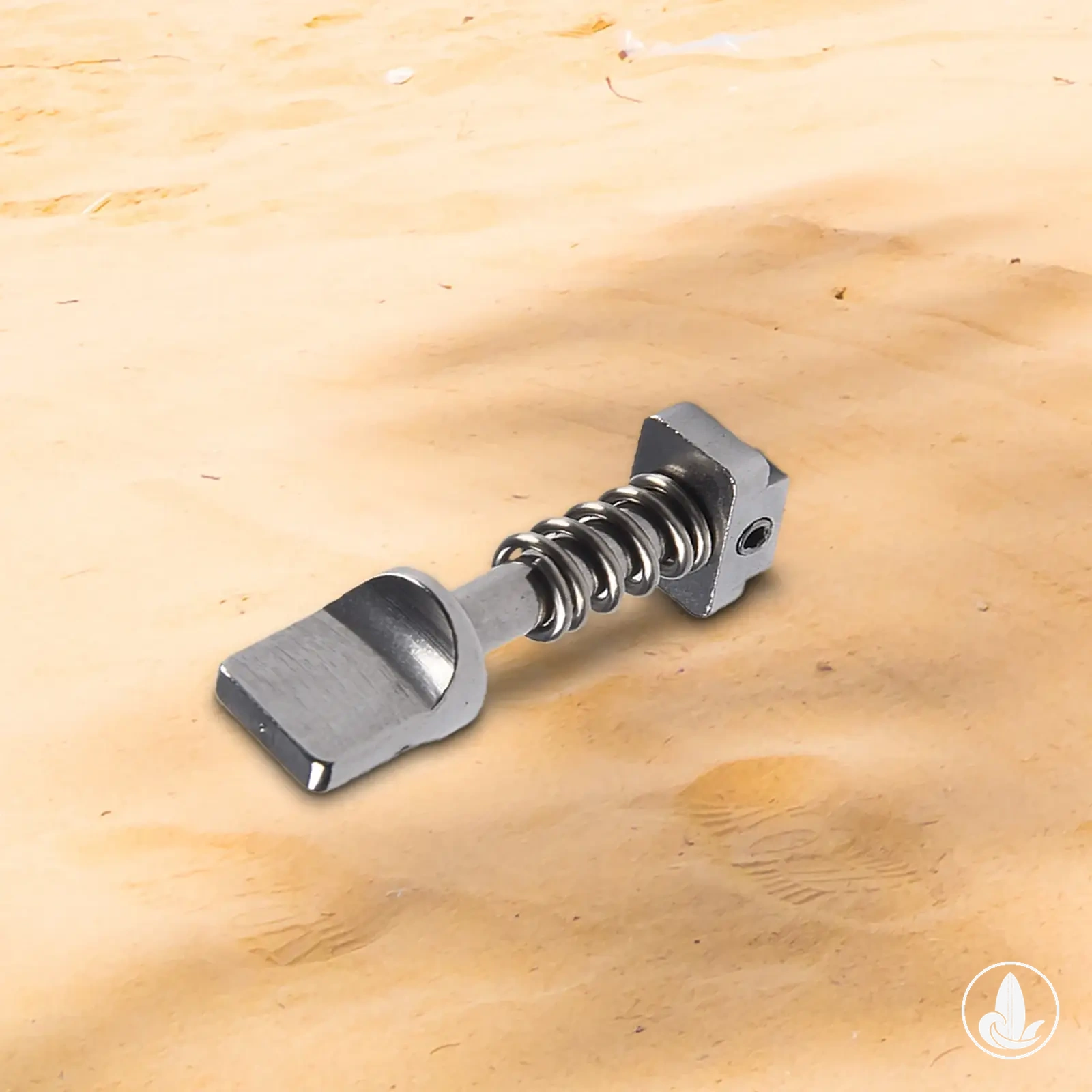
Fin keys, screws and small hardware
Used for removable fin-system adjustment or replacement only when the key, screw and hardware interface match the installed fin system.
Function guides selection: reinforcement points to compatible repair materials, temporary sealing to a patch or ding tape, material handling to preparation tools, and an intact removable fin system to matching fin hardware. Routine care items such as wax-removal tools remain surfboard-maintenance accessories rather than core repair equipment.
Repair Kits, Resins and Fiberglass Materials
A surfboard repair kit groups components by repair role. Resin chemistry and board construction are the critical compatibility attributes; the other components must belong to or suit that repair system rather than being treated as interchangeable.

- Resin
- Binding material for the applicable repair system.
- Hardener or catalyst
- Curing component specified for that resin formulation; the two terms are not generic substitutes across systems.
- Fibreglass cloth
- Reinforcement where the repair requires a laminated fibreglass layer.
- Filler
- Builds or fills a localised void within the compatible repair system.
- Mixing, measuring and sanding items
- Support preparation and finishing only when the chosen material and repair stage require them.
For a known PU/polyester construction, a polyester repair resin can match the original polyester-based system when the product states compatibility. For an EPS/epoxy construction, use an epoxy repair system compatible with EPS; standard polyester resin should not contact exposed EPS foam. If construction is unknown, identify it before choosing the resin system.
Patches and Quick-Fix Repair Materials
Patches, ding tape and filler solve different localised problems. Choose them by the function required at the defect rather than treating “quick fix” as one interchangeable material category.

Repair patch
Function: cover a small localised defect. Best fit when surface coverage is the immediate requirement.
Ding tape
Function: provide temporary surface sealing over a minor ding or crack where keeping water out is the immediate need.
Filler
Function: occupy or build a small void where material is missing; it does not replace reinforcement when reinforcement is required.
Sanding, Mixing and Surface-Preparation Tools
Sanding, measuring, mixing and application tools are supporting tools: each one serves a material-handling function at a particular repair stage. The chosen repair material determines which preparation tools are actually needed.

Abrasion
A sanding block or pad conditions or finishes the surface when abrasion is appropriate for the repair stage.
Measuring
A suitable mixing cup helps portion components according to the repair material's specified ratio or instructions.
Mixing
A cup and mixing stick combine separate components when the selected resin or filler system requires mixing.
Application
An applicator places prepared repair material on the localised area with controlled coverage.
A kit may include all of these items, but not every included tool is necessary for every minor repair. Use only the tools required by the selected material, surface condition and repair stage.
Fin Keys, Screws and Small Fin Hardware
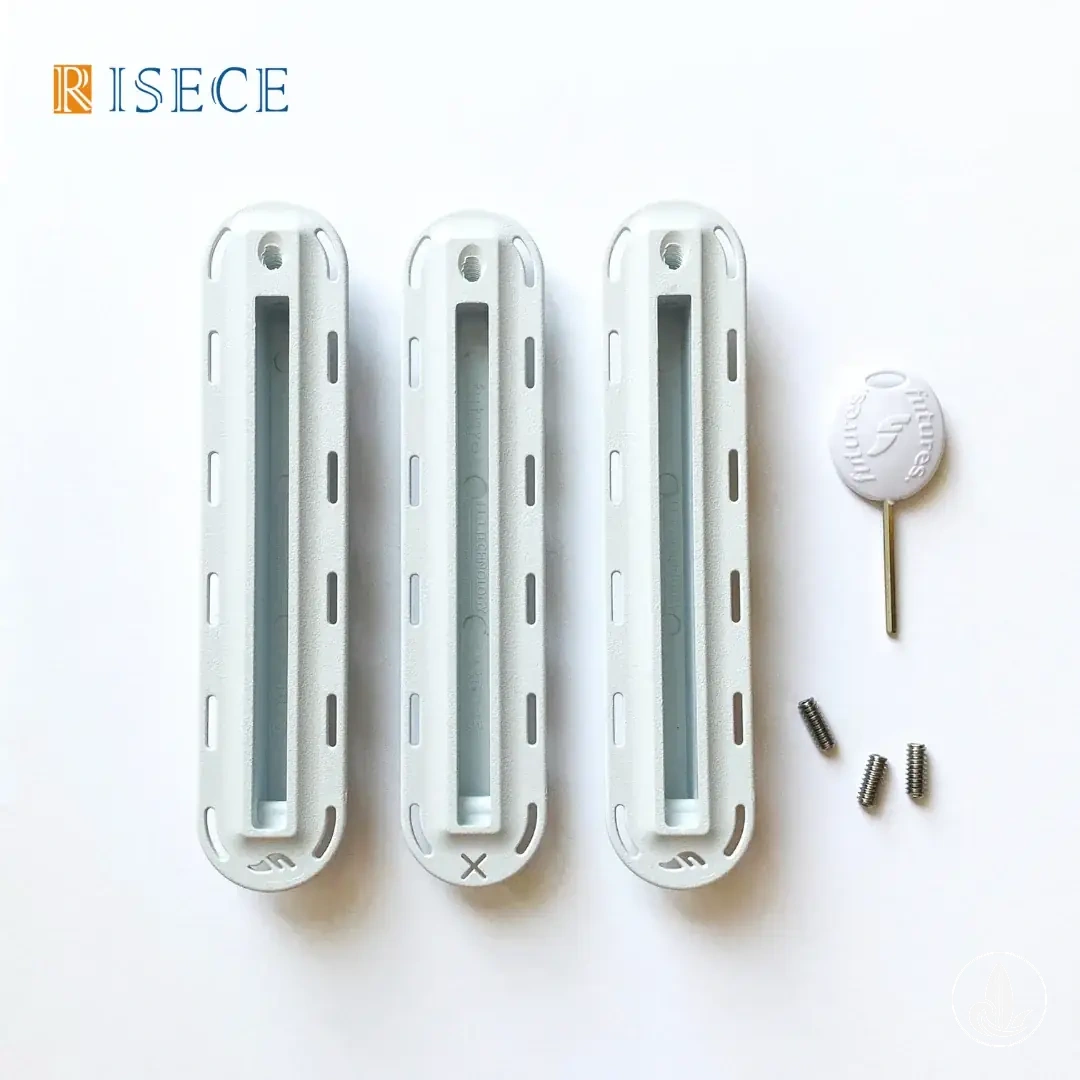
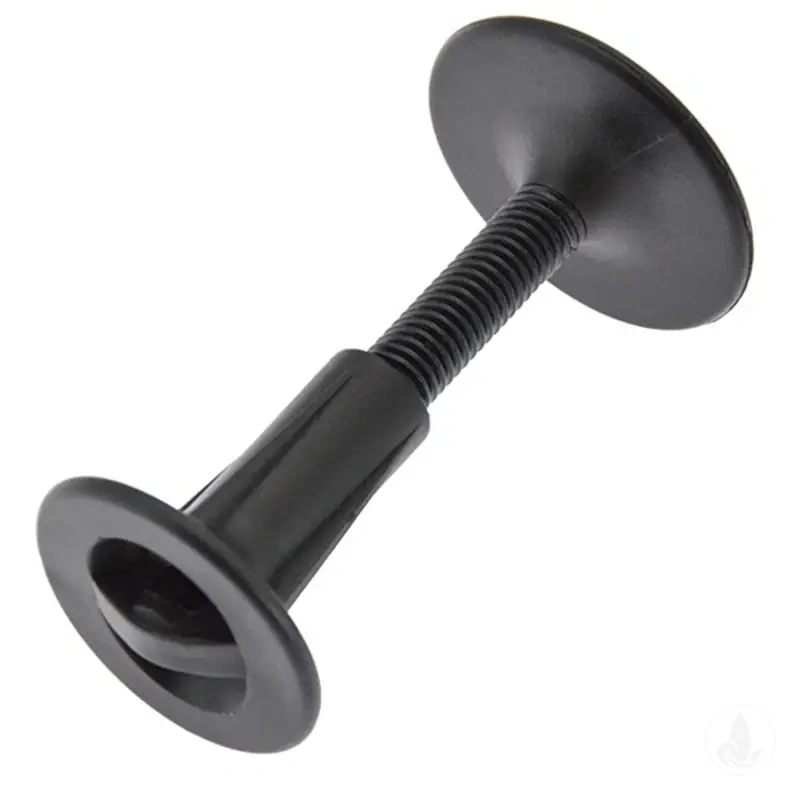
Fin keys, fin screws, grub screws and related small hardware belong to the removable connection between a fin and its fitting. They are appropriate only when the fin system and fin box remain intact and the problem is limited to adjustment or replaceable hardware.

Before selecting replacement fin hardware
- Identify the installed fin system rather than assuming one universal screw or key.
- Match the replacement part's thread, dimensions and tool interface to the existing system or its specified hardware.
- Use a fin key only when its interface matches the installed screw.
- If the fin box moves, cracks or damages the surrounding laminate, treat the problem as a broader repair rather than a small-hardware replacement.
Match Repair Materials to Surfboard Construction
Repair-material compatibility is controlled by the surfboard construction and the resin system that will contact it. Common PU boards are often glassed with polyester resin, while EPS-core boards are commonly built with epoxy resin because standard polyester resin can damage exposed EPS foam.
| Board construction | Repair-material condition | What to confirm | Selection consequence |
|---|---|---|---|
| Known PU/polyester construction | Polyester repair resin can match the original polyester-based fibreglass lay-up when the product is specified for that construction. | Confirm PU foam, the original resin system where known, and the repair product's stated compatibility. | Use a compatible repair system rather than selecting from kit name or appearance alone. |
| Known EPS/epoxy construction | Use an epoxy repair system that is compatible with EPS and the existing epoxy-board construction. | Confirm the repair material is specifically compatible with EPS/epoxy construction. | Do not apply standard polyester resin to exposed EPS foam; its styrene solvent can attack the foam. |
| Unknown construction | Resin compatibility remains unresolved until the construction is identified. | Check manufacturer information, board markings or reliable construction details, then read the repair product's compatibility instructions. | Defer resin-system selection rather than guessing between epoxy and polyester. |
If the construction cannot be confirmed, keep the epoxy-versus-polyester choice unresolved until reliable board information and the repair product's stated compatibility agree.
Choosing Repair Kits vs Individual Tools and Supplies
A complete repair kit favours convenience when an occasional minor repair needs several compatible materials and preparation items together. Individual tools and separate supplies favour control when the repair is construction-specific, repeated, or requires only selected components.
Compatibility is non-negotiable in both formats. A complete-looking kit is not suitable unless its resin and other repair materials match the board construction and the actual repair function.
| Selection Criterion | Repair Kit | Individual Tools and Supplies |
|---|---|---|
| Completeness | Favors convenience when the kit contents cover the required minor-repair materials and preparation tools. | Favors flexibility when the repair scope requires only selected tools or repair supplies. |
| Material compatibility | Requires confirmation that included repair materials and resin are compatible with the board construction. | Allows each repair material to be selected according to the known board construction and repair scope. |
| Tool quality and user confidence | Included tools should suit the preparation and material-handling functions the user expects to perform. | Individual tools can be selected according to the required function and the user's confidence with that tool type. |
| Consumable replacement | Consumables may require separate replenishment after the included quantities are used. | Supports replenishment of specific consumables while retaining reusable tools. |
| Portability | Keeps the included repair supplies and tools together as one portable set. | Allows a task-specific set to be carried, but the required items must be assembled separately. |
| Repair frequency | Favors occasional minor repairs when compatible kit contents already cover the repair scope. | Favors repeat use when reusable tools are retained and consumables are replenished as required. |
For occasional minor repairs, a compatible kit is often simpler when it already contains the required components. For repeat repairs, individual reusable tools plus separately replenished consumables usually provide more control over material choice and replacement.
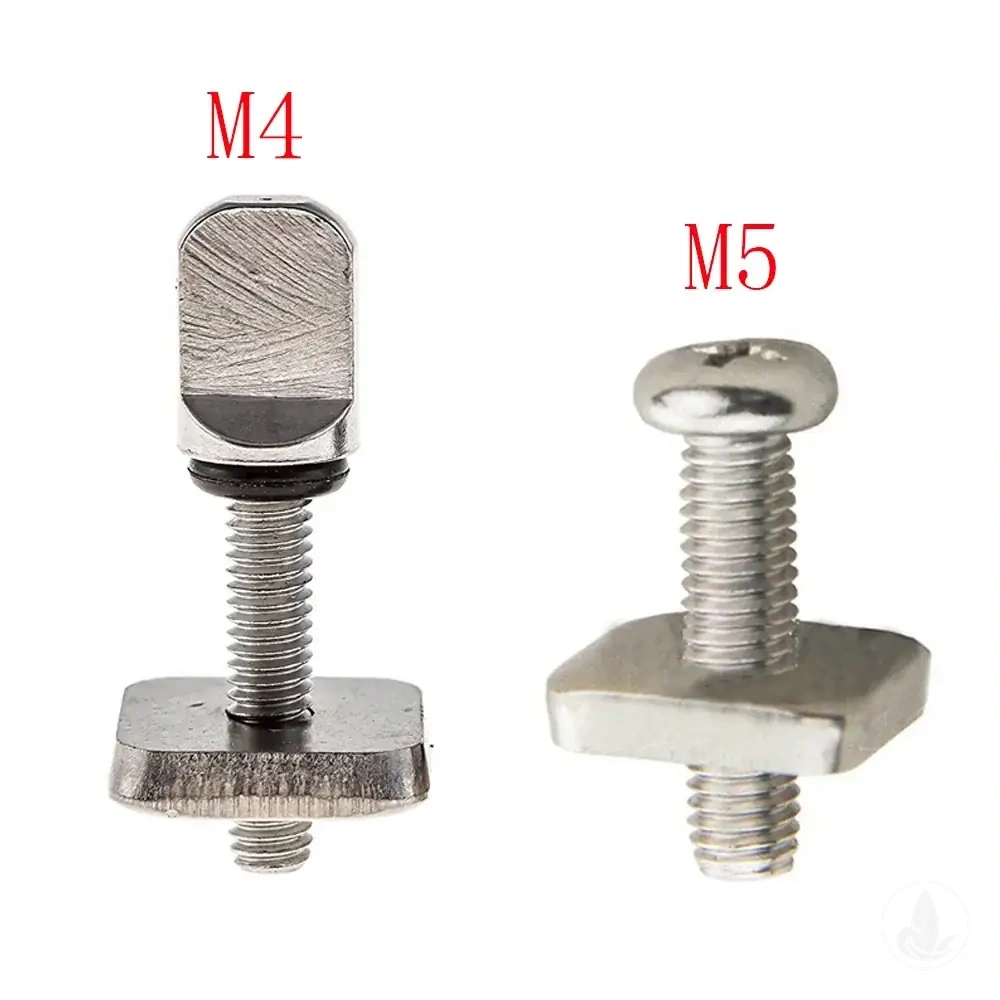
Example replacement hardware: use these listings only after the compatibility checks above match your board or fin system.
When Damage Exceeds the Scope of Basic Repair Tools
Basic repair tools stop being the right decision aid when the problem is no longer minor and localised. Severe structural damage, extensive or uncertain water intrusion, heavy delamination, major deformation, buckling, snapping, or complex fin-box damage all justify broader assessment.
Check these warning conditions before treating the damage as a basic repair
- Structural change: buckling, snapping or loss of the board's normal form.
- Water intrusion: water entry appears broad, persistent or cannot be confidently limited to the visible defect.
- Delamination or deformation: the outer laminate is heavily separated or the board shape is visibly distorted.
- Fin-box involvement: the box moves, cracks or damages the surrounding structure rather than merely needing a removable screw or key.
No single visible size threshold works for every surfboard. Damage extent, location, construction and structural effect determine the boundary. A small localised ding with known construction can remain within basic repair scope; a snapped, buckled, heavily delaminated or structurally compromised board should move to professional assessment rather than a simple surface repair.